Here's a great series that I thought I would pass on...hope you find it interesting! –Kim
Basic Breed Information – Part 6
Boxer
 In the entire world of dogs, the Boxer dog stands apart not just for its looks but also for its intelligence. The Boxer is not a pet for everyone. This special dog needs specialized handling and training. It is one of the highly intelligent breeds among the species of dogs.
The owners of the boxer dog need to decide beforehand if this particular breed is what they are wanting. The boxer is a sturdy, good-looking dog with many positive features. It is highly intelligent, lovable and loyal, and makes a very good pet.
Training a Boxer should begin quite early from about 6 weeks. Formal training can begin when it is about 13 weeks old. The Boxer should be given a chance to socialize and should be allowed to meet and play with other dogs.
The Boxer is dominant by nature, and therefore, it requires firm handling to keep it under control. It makes a good guard dog, which is why they are seen a lot in the police force. A well-trained boxer will help in sniffing out suspects. Its highly sensitive nose is good for detecting narcotics and other drugs. It can also help detect bombs. So, it is quite common to see Boxers not only serving in the police force, but also hold ranks.
The problem with the Boxer breed is that it tends to get bored and turn reclusive very easily. Therefore, it's important to keep this particular breed constantly engaged. This highly intelligent dog needs a good caretaker who can keep it under control. Otherwise it is known to turn violent and unfriendly.
Boxers need a lot of attention and care. The owner of this breed will need to spend a long time with this dog; otherwise, they tend to become withdrawn or ill-tempered.
The Boxer needs to be kept engaged for the greater part of the day. Taking it for long walks three times a day is a must. Playing with your pet and keeping it engaged for most of the day is one of the prime requisites.
A Boxer is a joy to own. With its good looks, intelligence, courage and loyalty, the Boxer makes its owner both happy and secure. This highly lovable breed has a lifespan more or less similar to other breeds. The average lifespan of a Boxer is about 11-12 years. However, some are known to live for as long as 15 years.
For more in-depth Boxer training info, check out: All about Boxers or Secrets to Dog Training.
Venkata Ramana is a Pitbull lover since childhood. Visit his Boxer Dog Web site and discover how you can make your boxer dog the happiest, healthiest loving dog alive.
Chihuahua
 The Chihuahua is a tiny dog with an apple-shaped head and a short pointed muzzle. It has large, round, very dark eyes, sometimes dark ruby or luminous in color. The trademark large ears should be held erect. Puppies have a soft spot or "molera" on the top of the skull. The bone usually closes the gap by adulthood. The body is cobby (stout), longer than it is tall, and the tail is sickle-shaped – curled over the back or to the side. Besides the common short-haired variety, there is also a long-haired type. Colors include fawn, sand, chestnut, silver and steel blue, but any color is accepted, including black & tan and parti-color. The dog is more robust than he looks, with a level back, and legs coming down straight and square. The Chihuahua is a popular, economical companion dog.
The Chihuahua is a good companion dog. Courageous, extremely lively, proud and enterprising, it enjoys affection. Bold and saucy, it moves swiftly to avoid being stepped on. Chihuahua's can be strong-willed without the proper human leadership. They are intensely loyal and become very attached to their owners. Some like to lick their owner's faces. For some, they may be slightly difficult to train, but they are intelligent, quick learning, and respond well to proper, gentle (positive reinforcement) training. They may require patience to housebreak. Many owners simply paper train this breed.
Be sure to socialize your Chihuahua as a pup to avoid excessive aggressiveness with other dogs as well as reserve with strangers. Do not let the Chihuahua get away with things you would not allow a large dog to do (Small Dog Syndrome), such as jumping up on humans. While it may be cute for a 5 pound tiny dog to put his paws on your leg when you come home from work, it is allowing dominant behavior. If you allow this little dog to be your pack leader, it will develop many behavior issues, such as jealousy, and will become undeniably suspicious of anyone except its owner. When strangers are present, it will start to follow his owner's every move, keeping as close as possible. A Chihuahua who is pack leader of its humans may snap at children.
 This breed is not recommended for children. Most people treat the Chihuahua differently than they would a large dog. Because of his size, this breed tends to be babied and things we humans clearly see as bad behavior for a large dog is overlooked as cute with a small dog. Small dogs also tend to be walked less, as humans assume they get enough exercise just running around during the day. However a walk provides more than just exercise. It provides mental simulation, and satisfies the migration instinct, all dogs have. Because of this, small breeds such as the Chihuahua tend to become snappish, yappy, protective and untrusting of kids and adults they do not know. Chihuahuas who are their human's pack leader tend to be fairly dog-aggressive. An owner who realizes this and treats the Chihuahua no differently than they would a large breed, becoming a clear pack leader, will get a different, more appealing temperament out of this wonderful little dog.
Because of his short nose, the Chihuahua tends to wheeze and snore. His prominent eyes are susceptible to corneal dryness and secondary glaucoma. He is prone to slipped stifle, gum problems, colds, stress and rheumatism. Don't let him lick or eat toxic products, fertilizer or chocolate. Feed him lightly as he tends to gain weight. Chihuahua puppies are born with large heads, frequently necessitating cesarean deliveries by a skilled veterinarian. They are vulnerable to fractures and other accidents in puppyhood. Some of the breed have a molera, an unclosed section of the skull which can remain open throughout life. This makes the dog prone to injury.
The Chihuahua hates the cold and may shiver. It will tolerate and even appreciate a warm sweater on cooler days. They are good little dogs for apartment life. Although it is tempting to carry these dainty creatures about; these are active little dogs, who need a daily walk. Play will take care of a lot of their exercise needs; however, as with all breeds, play will not fulfill their primal instinct to walk. Dogs who do not get to go on daily walks are more likely to display a wide array of behavior problems. They will also enjoy a good romp in a safe open area off-lead, such as a large fenced in yard. Don't think that just because he is small, he should be confined to a small space.
The smooth, short-haired coat should be gently brushed occasionally or simply wiped over with a damp cloth. The long coat should be brushed daily with a soft bristle brush. Bathe both types about once per month, taking care not to get water in the ears. Check the ears regularly and keep the nails trimmed. This breed is an average shedder.
This is the oldest breed on the American continent and the smallest breed in the world. Native to Mexico, nonetheless, he seems to have been introduced by the Chinese. He was only brought to Europe at the end of the nineteenth century. The Chihuahua is named after the Mexican state of Chihuahua where he was brought to the rest of the world by travelers. This breed is believed to have been sacred to the pre-Columbian Indian nations. The most valued dogs weigh under 2-1/4 pounds (1.3 kg). Some can even stand on all fours in a person's palm! There is a long-haired variety that is judged separately, but is essentially the same except for the coat.
For more in-depth Chihuahua training info, check out: Chihuahua Training Secrets or Secrets to Dog Training.
Joan & David Anderson are creators of a site dedicated to pictures of Chihuahuas, plus Chihuahua resources. Visitors and Chihuahua picture submissions are welcome.
Cocker Spaniel
 The Cocker Spaniel is basically a hunting dog, and its appearance reflects the capability of the dog. These dogs socialize well and behave nicely with children. Cocker Spaniel obedience training is normally simple, as they are always eager to please their owners. Cockers sometimes may become more possessive of their owners and bark to alert them of a visitor. If they are left alone for a longer period, they become aggressive and may retaliate.
Cockers are brilliant family dogs and require lots of exercise; they also love swimming and running off the leash. They are friendly and love human companionship and like to please their owners. They live about 11 to 12 years; some of the health problems that affect them are skin allergies, cataracts, shyness, benign tumors, bite problems and deafness.
There are two types of Cockers: the English and the American. The length in these two types distinguishes them. Normally, American Cocker is longer than the English Cocker. Cocker Spaniel obedience training involves trimming the coat and regular grooming. If you want to give them a neat look, trimming is necessary.
Cockers are excellent working and hunting dogs. Cocker Spaniel obedience training can be carried out without much difficulty, as they are highly intelligent. Also, they are good learners and always eager to please their masters. The dogs can be trained as sniffer dogs that are used to check for food products or drugs. A working Cocker is a flushing dog, and it need some training to do the job efficiently. A well-bred Cocker Spaniel is playful, gentle, trusting, loyal and happy towards everyone.
Cocker Spaniel obedience training includes the special grooming needs. The coat length may be wavy or flat. The color of the coat can be buff, liver, etc. The ears are silky and long and require daily cleaning. Cockers should be combed and brushed at least twice or thrice a week to shun matting on the chest, ears and legs. They appreciate and love long vigorous walks.
Cocker Spaniels easily catch ear infections; hence, the ears should be cleaned properly. If you are leaving her for professional grooming, then make sure her ears are cleaned properly. Any excess fluid or water should not remain inside the ear. The ear cleaning may be difficult to carry out. Cocker Spaniel obedience training will be easier if you keep her healthy and free from ear infections.
Cockers' teeth should be cleaned with the specific toothpaste and brush at least twice in a week. Brushing removes the tartar and can help to avoid cavities and periodontal disease. The toenails also require care and should be clipped, regularly. Strengthen your emotional bonds with her to keep her healthy and happy. If left alone, she becomes more aggressive and even can bite or bark for longer hours to show her unhappiness. On the other hand, if trained right from a young age, she will behave very well with others and children, and shows her happiness and affection towards the family.
This article was brought to you by Sean Green, at Online Dog Training (©2008 Dog Obedience Training).
For more in-depth Cocker Spaniel training info, check out: Cocker Spaniel Training or Secrets to Dog Training.
Dachshund
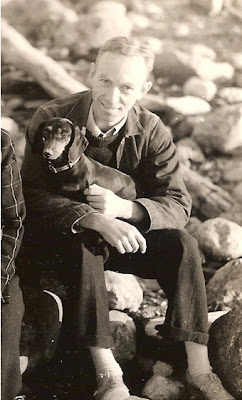
 A Dachshund – originally developed by German foresters – is an intelligent hound dog with a sturdy and willful personality. Its body is long and legs are short. Other features are a short sleek coat and long drooping ears.
Also known as Teckel, Dachshunds exist in three sizes – standard, miniature and toy and can be short-haired, wired-haired or long-haired. Typically, Dachshunds are independent and stubborn. But they can be transformed into a sociable breed through constant and rewarding training. Training dachshunds requires considerable patience and diligence.
Training includes house training and socializing with strangers. Since the Dachshund is a hunting breed, it must be properly trained to get along with different types of pets such as cats. Dachshunds also need extensive desensitizing training to overcome their suspicious behavior towards outsiders. It is always wise to start socialization and training of a dachshund at an early age. Vigorous training is required for adult Dachshunds.
Dachshunds should be treated as one of your children. As they do not respond to any harsh training method, Dachshund training should always be game oriented and food-based. Eye contact is also important while training Dachshunds. And don't forget to praise him with tasty rewards when he performs well. Well-planned exercises coupled with lots of praise can bring amazing changes in Dachshunds. A properly trained Dachshund can walk on a leash and sit by your side without pulling when you stop walking.
There are numerous training schools that offer comprehensive learning programs for dachshunds. Instructions and tips for training dachshunds can be found from various sources including the Internet. In addition, CDs with info on dachshund training are available in most pet stores.
For more in-depth Dachshund training info, check out: Dachshund Training Secrets or Secrets to Dog Training.
For more information about Dachshunds, visit Dachshund World.


 Read more...