The Real Story of Toto  

Posted by — Kim in , , , , , , , , , ,

Here's the fascinating story of one of Hollywood's most memorable dogs: Terry, aka "Toto" –Kim

Toto, the Story of a Dog
By Allan Ellenberger

Judy Garland and Terry, aka TotoJudy Garland and Terry, aka "Toto"

The most indulged of all the spoiled lovelies of Hollywood during the Golden Age were the canine actors who worked in films. They had their own hotel – The Hollywood Dog Training School – where at one time, seventy-five of the best known dogs of the screen lived in tranquil comfort.

The school was set on a pleasant ten-acre site, covered with oaks and willows, near Laurel Canyon Boulevard five miles north of Hollywood. Three hundred feet back from the road stood a cream colored frame house and back of it were two kennels, each 150 feet long. It featured southern exposure, long runs to each kennel, a large grass playground, showers in each section, and several porcelain bathtubs with hot and cold water, an electric drier and a special kitchen where, every day, a tempting cauldron full of vegetable and beef bone soup was cooked for dinners of the distinguished boarders.

Carl Spitz and some canine friendsCarl Spitz and some canine friends

The dogs, like all other actors, employed a manager – the amiable Carl Spitz – who drove as hard a bargain for his clients as any other agent in Hollywood. The German-born Spitz first took up the work of schooling dogs in Heidelberg, where his father and grandfather were dog trainers. Spitz trained dogs for military and police service in World War days. He saw Red Cross dogs search for dying men in no man's land – and he devoted his life to educating man's best friend.

Leaving Germany, Spitz arrived in New York in 1926, moved briefly to Chicago and soon found himself in Los Angeles, where, the following year he opened his first dog training school at 12239 Ventura Boulevard. Sometime around 1935, he moved the facilities one mile north to a ten-acre spot at 12350 Riverside Drive, where he remained for almost twenty years. "This is a school, where dogs go to classes just like children," Spitz said. "We have grammar school, high school and college."

At first, his services were for the public, but soon, the movies came calling. The transition to sound films required Spitz to drop his verbal commands and develop a series of soundless visual hand signals.

His first sound film was Big Boy (1930) starring Al Jolson in which he trained two Great Danes. This one was followed by the John Barrymore classic, Moby Dick (1930). It was too expensive for studios to create their own specially trained dogs, so Spitz suddenly found himself in big demand.

Canine stars soon began to emerge, such as Prince Carl, the Great Dane appearing in Wuthering Heights (1939). The first big dog star to appear from Spitz's stable was Buck the Saint Bernard who co-starred with Clark Gable and Loretta Young in Call of the Wild (1935). Others included Musty (Swiss Family Robinson), Mr. Binkie (The Lights that Failed) and Promise (The Biscuit Eater). However, probably the best known dog star to emerge from the Spitz kennel that is known today is arguably Toto from The Wizard of Oz (1939).

Clark Gable with Buck in Call of the Wild (1935)Clark Gable with Buck in Call of the Wild (1935)

Toto, a purebred Cairn Terrier, was born in 1933 in Alta Dena, California. She soon was taken in by a married couple without children in nearby Pasadena – they named her Terry. It soon became apparent that Terry had a problem with wetting the rug, and her new owners had very little patience with her. It wasn't long before they sought the services of Carl Spitz's dog training school in the nearby San Fernando Valley. Spitz put her through the usual training and in a few weeks she was no longer watering the carpet.

However, by the time her training was completed, Terry's owners were late on the kennel board. Spitz attempted to contact them, but their telephone had been disconnected. With nothing else to do, Carl's wife suggested that they keep her.

Terry sort of became the family pet, until one day, Clark Gable and Hedda Hopper stopped by the kennel for some publicity on Gable's new film, Call of the Wild. One of Carl's dogs, Buck the St. Bernard, had a large role in the film and Hedda wanted some photos of him with Gable. That day, Terry made himself known to the Hollywood people and Carl took note, and the next day, took her to Fox Studios to audition for a part in the new Shirley Temple film, Bright Eyes (1934).

Jane Withers and Shirley Temple with Terry in Bright Eyes (1934)Jane Withers and Shirley Temple with Terry in Bright Eyes (1934)

Spitz put her through her paces – playing dead, leaping over a leash, barking on command – for the executives and was then presented to Shirley for the final say. Terry was placed next to a Pomeranian named Ching-Ching, who wasn't part of the film but was Shirley's own dog. Terry stood there for a moment, while Ching-Ching looked at her. Finally, Terry rolled over, was sniffed and both dogs began running around Shirley's dressing room. At last, Shirley picked up Terry and handed her to Spitz, grabbed her dog and skipped to the door. "She's hired," Shirley giggled as she left the room. Bright Eyes, which co-starred Jane Withers, would be Terry's first film.

That same year, Terry made another film, Ready for Love (1934) at Paramount. Next, she appeared in The Dark Angel (1935) with Fredric March and Merle Oberon. Other films followed, including Fury (1936) with Spencer Tracy; The Buccaneer (1938) for director Cecil B. DeMille and an uncredited part in Stablemates (1938) with Wallace Beery and Mickey Rooney.

Franciska Gaal with Terry in Cecil B. DeMille's The Buccaneer (1938)Franciska Gaal with Terry in Cecil B. DeMille's The Buccaneer (1938)

One day, it was announced that MGM was going to produce L. Frank Baum's children classic, "The Wizard of Oz." Spitz knew that Terry was a mirror-image for Dorothy's dog, Toto, based on sketches throughout the book. So he began teaching her all the tricks from the book, and sure enough, in two months, he received a call from MGM for an audition.

Spitz and Terry met with the producer, Mervyn LeRoy who had been inspecting an average of 100 dogs daily for the past week. "Here's your dog, all up in the part," Spitz said to LeRoy when he submitted Terry for scrutiny. Terry could already fight, chase a witch, sit up, speak, catch an apple thrown from a tree, and took an immediate liking to Judy Garland. Frank Morgan, Ray Bolger, Bert Lahr, Jack Haley and the rest of the cast were accepted on first acquaintance with the dog. On November 1, 1938, Terry won the role of "Toto" without a test.

Judy Garland singing Over the Rainbow to Toto in Wizard of OzJudy Garland singing "Over the Rainbow" to Toto in The Wizard of Oz (1939)

Terry received a weekly salary of $125, which was more than the studio paid the Munchkins. Before filming began, Terry spent two weeks living with Judy Garland, who fell in love with her and tried to buy her from Spitz. Of course, he refused. Judy's daughter, Lorna Luft, once said that her mother told them that the dog had the worst breath in the world. "It all made us laugh," Luft said, "because the dog was constantly put in her face [with its] silly panting, and she did everything but wince, because poor little Toto needed an Altoid."

Terry did everything required of her, although she hesitated at being put in a basket and standing in front of the giant wind fans, simulating a tornado. One day, they were filming on the Witches Castle set with dozens of costumed "Winkies" when one of them stepped on Terry's paw. When she squealed, everyone came running, including Judy, who called the front office and told them that Terry needed a rest. Until Terry returned a few days later, they utilized a stand-in for her.

The remainder of filming went smoothly for Terry, and even though she appeared in approximately fifteen films, The Wizard of Oz was ultimately her best known. When the film was released, Terry appeared along with the cast at the premiere held at Grauman's Chinese Theater. She became so famous that her paw print brought top prices among autograph seekers. Soon, she began making public appearances and became so popular, that Spitz officially changed her name to Toto.
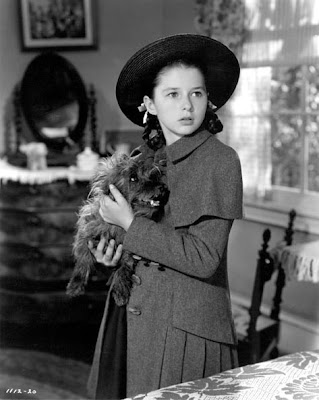
Terry, now billed as Toto with Virginia Weidler in Bad Little Angel (1939)Terry, now billed as Toto with Virginia Weidler in Bad Little Angel (1939)

That year was a busy one for Toto. Besides The Wizard of Oz, Toto also made a cameo appearance in MGM's The Women (1939) starring Norma Shearer and Joan Crawford, and had a larger role in Bad Little Angel with Virginia Weidler. The next few years had her appearing in Calling Philo Vance (1940), Twin Beds (1942), and Tortilla Flat (1942), again with Spencer Tracy and Hedy Lamarr and John Garfield. Her final film was George Washington Slept Here (1942) starring Jack Benny and Ann Sheridan. That year Toto retired to Spitz's huge facility on Riverside Drive, until she died sometime in 1944. Even though several of Spitz's dogs were interred at the Camarillo Pet Cemetery in Ventura, he chose to bury Toto on the school property.

Carl Spitz continued to train dogs. In 1938, he wrote a handbook, "Training your Dog," which contained a foreword by Clark Gable. As far back as 1930, Spitz tried to get the Army to let him train dogs for war use. But, nothing came of it. Finally, in the summer of 1941, they took him up, in a limited way. Spitz agreed to furnish the Army fifty trained sentry dogs – at no cost. He delivered six, had twelve more under training, and already spent $1500 of his own money in the process.

Spitz trained the first platoon of war dogs installed in the continental United States, just prior to World War II. He was an expert adviser to the War Department in Washington DC and helped formulate the now famous K-9 Corps for both the US Army and Marine Corps. He became prominent nationally as a dog obedience judge at dog shows. Carl Spitz died on September 15, 1976 and is buried at Forest Lawn in Glendale.

Around 1958, the Ventura Freeway was being built through the San Fernando Valley and the route went through Spitz's school, forcing him to relocate. Today, the Hollywood Dog Training School is still in existence at 10805 Van Owen Street.

Sadly, not only did the freeway erase the school, but it also obliterated Toto's grave.

It's appropriate that Toto's Memorial Marker is installed at Hollywood Forever Cemetery. Many of the people that worked with Toto are interred there including Victor Fleming, Harold Rosson (The Wizard of Oz, Tortilla Flat); Cecil B. DeMille, Maude Fealy (The Buccaneer); Erville Anderson, Carl Stockdale, Franz Waxman (Fury); Arthur C. Miller (Bright Eyes); Sidney Franklin, Gregg Toldand (The Dark Angel); Ann Sheridan (George Washington Slept Here). She is in good company.

Toto Memorial Marker, installed 6/18/2011 at the Hollywood Forever Cemetery

Toto Memorial Marker, installed 6/18/2011 at the Hollywood Forever Cemetery

Allan R. Ellenberger is the author of several books on Hollywood.

Source: http://dogblog.dogster.com/2011/07/26/the-riveting-rea-story-of-toto/


Digg Delicious StumbleUpon Reddit BlinkList Furl Tumblr Facebook Google Bookmark Google+
Read more...

Is Your Dog Potty Trained Enough?  

Posted by — Kim in , , , , , , , , , , , , , , ,

Here are some good housetraining tips that I thought I would pass on. –Kim

House Training Your Puppy or Adult Dog

House training a puppy or adult dog is such an essential issue for his owner that even a single exclusive tip turns out to be extremely helpful.

The first step in making your dog fit for polite company would be to potty train him. Some see this training as a hassle and some as a challenge.

For me, it is part of bringing up a pet.
 
There are a few things you need to know before you actually start potty training a puppy or adult dog. I enumerate these below:
  • You need to understand your dog's body language. Watch for signs that will indicate to you when your pet wants to eliminate.
  • If you own puppies, remember that they need to go potty at fairly frequent intervals – as soon as they wake up, after short naps, after play-time, after meals, before and after being crated and finally, before retiring for the night.
  • Take your dog for walks at the time that he usually does his potty. Take him out to the yard, and then, to the same place there every time he needs to answer nature's call.
  • Praise your dog after he eliminates at the right place. Some dog owners even give treats to their dogs. But remember to do this every time he does it right. He will relate the rewards to his having "done it right" and zero in on the spot where you want him to defecate regularly.
  • With time, you can try signal training. This is so that you know when your doggie wants to go. You can hang a bell at his level near the door and teach him to push it with his nose or pat it with his paw on his way out.
  • Until your dog has been fully potty trained, keep him under strict vigilance. Do not let him roam around the house freely.
  • Use a crate. A crate-trained dog is usually very happy to get his own den. The advantage of crating is that dogs do not soil the place where they sleep. So, he will naturally not eliminate inside the crate.
  • If you have a small dog and if you live in a high-rise building or in a place that does not have a proper backyard, you can try litter pan training. This means to create a space for your pet to eliminate in your house itself.
  • Use positive reinforcements while housebreaking puppies or adult dogs. Do not scold or hit him, as you will gain nothing by doing that. He will only associate punishment with your return from outside. If you catch him in the act, a stern 'NO' or 'FREEZE' will do (but be consistent). It will startle the dog enough for him to stop pooping.
  • Be prepared to return to a soiled home if you are keeping your dog home alone for more than 4 hours, as separation anxiety is quite common among home-alone dogs.
  • Accidents will happen. It is unusual for a trained adult dog to work against his house training. But medical problems or health disorders may lead to sudden accidents.
  • Many dogs mark their territory. These can be a leg of a table or a particular wall. Intact male and female dogs mark their territories by urinating. Use deodorizers to spray on the places where your dog has marked.
  • If you are patient and are ready to accept that house training a dog takes time, even months sometimes, you will end up having a good house-trained dog.

Now we will move on to how to potty train puppies and adult dogs.
 
Potty Training a Puppy
 
Irrespective of breeds, house training a puppy is considered to be one of the biggest challenges by dog owners. If you think house training your puppy simply involves a steady supply of old newspapers or puppy pads, then think again.
 
A puppy does not develop full control over his bladder until he is over 4 or 5 months old. Since they are growing and developing rapidly at this time, puppies eat more, burn more calories and need to eliminate more frequently than an adult dog.
 
After each nap, meal, drink or playtime, take your puppy to his designated area (indoors or outdoors, wherever you have decided) and stay there until he eliminates. Then bring him to his crate.
 
Repeat this situation everyday until he has developed a habit out of it.
 
Potty Training an Adult Dog

The best way to house train an adult dog is to begin all over again.
 
Observe him very closely. Maybe even maintain a diary of where he goes and when. Whether he is pooping when you are home or only when you are outside; whether you can, time yourself to be home when he feels the need to go outside.
 
You can try dog crates, but be careful to introduce him gradually to them.
 
Remember: Commitment, consistency and intelligent use of positive reinforcement will make you the owner of a perfectly house-trained dog. Don't expect miracles. You will only be disappointed.
 

Get this unique house training guide and start house-breaking your dog today.
 
Copyright © 2009 TrainPetDog.com
 

Digg Delicious StumbleUpon Reddit BlinkList Furl Tumblr Facebook Google Bookmark Google+
Read more...

Adopt a Deaf Dog???  

Posted by — Kim in , , , , , , , , , , , , , , , , ,

Deaf Dog Adopted by Deaf Kids after Learning Sign Language
By Kevin Murphy
Feb 8, 2011

Most people may be reluctant to adopt a deaf dog, but what if they were deaf themselves?
KANSAS CITY, Missouri (Reuters) – The idea made sense to inmates at a Missouri prison who trained a deaf dachshund in sign language and then asked the Missouri School for the Deaf in Fulton to take him in.
Today, the dog named Sparky is right at home with the school's youngsters, who have taught him additional sign language. And a second deaf dog, a Boston Terrier named Petey, may be on his way to the school soon.
Superintendent Barbara Garrison approved bringing Sparky to the school.
"She really thought it would be a great learning experience for the kids," Garrison's secretary Barbara McGrath said in an interview Tuesday.
Sparky came from the South Central Correctional Center in Licking, Mo., which has also offered Petey. Garrison is interested in taking in Petey, but only if she knows it can eventually be placed in a permanent home after some sign language training, McGrath said.
Sparky responds to hand signals to sit, heel, lay down, and stop and is working on additional signs that mean "food" or "outside."
Sparky and Petey come from the Puppies for Parole program of the Missouri Department of Corrections in which inmates train animals with behavioral or other issues that make them difficult to adopt. The program saves dogs that might otherwise be euthanized and it gives inmates a constructive activity, said Tina Holland, activities coordinator at the Licking prison.
"It's been wonderful – it's gone far beyond what we thought it would be," Holland said. "Their goal is just to get these dogs a home."
   
(Writing by Kevin Murphy, edited by Mary Wisniewski and Greg McCune)

Also, see:

Digg Delicious StumbleUpon Reddit BlinkList Furl Tumblr Facebook Google Bookmark Google+
Read more...

More on the Pet Vaccination Controversy  

Posted by — Kim in , , , , , , , , , , , , , , , , , ,

Here's some great advice that I thought I would pass on...hope you find it informative! –Kim

10 Thoughts on Vaccines
by Dr. Andrew Jones

Here's a what a large pet information website has to say about vaccines:

"One of the most important things you can do for your four-legged friend is to stay up to date with his vaccinations. Vaccinations protect our pets from a number of potentially deadly infectious diseases and ensure they stay healthy for years to come"

Really?

Here is what the American Veterinary Medical Association (AVMA) has to say:

"Vaccination is a potent medical procedure with both risks and benefits. While there is evidence that some vaccines provide immunity beyond one year, re-vaccination of patients with sufficient immunity does not necessarily add to their disease protection and may increase the potential risk of post-vaccination adverse events."

Adverse events may be associated with the antigen, adjuvant, carrier, preservative or a combination, thereof.

Possible adverse events include, but are not necessarily limited to:

  • failure to immunize
  • anaphylaxis
  • immuno-suppression
  • autoimmune disorders
  • transient infections
  • long-term infected carrier states
  • and local development of tumors

My suggestions

  1. QUESTION what you read – including me.
  2. Make your own INFORMED decision.
  3. ONLY vaccinate for the most common diseases in your area and give the LEAST number of vaccines as INFREQUENTLY as possible.
  4. ASK your veterinarian about the incidence of these 'life threatening' infectious diseases.
  5. NEVER vaccinate a sick or weakened pet.
  6. DO vaccinate your puppy against Parvovirus and Distemper but only 2 series of vaccines at 8 and 12 weeks.
  7. DO vaccinate your kitten against Panleuk, Herpes and Calici again at 8 and 12 weeks.
  8. The Rabies question depends upon state regulations and the chance of your pet EVER being exposed to it.
  9. The question of when to re-vaccinate, and how frequent is changing I would still re-boost 1 year later, then likely, never again.
  10. Keep your dog and cat healthy with some of the ALTERNATE options that I frequently discuss.

DISCLAIMER: This information is for educational purposes only and is not intended to replace the advice of your own Veterinarian. Dr Andrew Jones resigned from the College of Veterinarians of B.C., effective December 1, 2010, meaning he cannot answer specific questions about your pet's medical issues or make specific medical recommendations for your pet.

http://www.theinternetpetvet.com
Copyright © 2011 Four Paws Online Ltd


Dr. Andrew Jones, DVM has been a practicing Veterinarian for almost 20 years. He is a strong advocate of Natural Pet Health Care, and knows that the most important way to heal our pets and prevent disease is through proper nutrition. He developed Ultimate Canine to give our dogs that extra advantage – something that will provide them with everything they need to develop stronger immune systems to fight disease, heal sore or stiff joints, and help them live longer, happier lives. Dr. Andrew Jones' main focus is on alternative, non-traditional remedies for pets. His interest in alternative pet medicine culminated in the writing of his book, Veterinary Secrets Revealed.


Also, see:

Digg Delicious StumbleUpon Reddit BlinkList Furl Tumblr Facebook Google Bookmark Google+
Read more...

A Couple Cute Dog Videos  

Posted by — Kim in , , , , , , ,

Here are a couple of really cute videos that I thought I would pass on... –Kim

Puppy Fakes Her Own Death while Playing
Wow, what an actress!

Which is the Guilty Dog?
This is just too cute!


Digg Delicious StumbleUpon Reddit BlinkList Furl Tumblr Facebook Google Bookmark Google+
Read more...

The New Puppy  

Posted by — Kim in , , , , ,

Here's a really cute pic that I thought I would pass on...how true to life! –Kim

I guess I'll just sleep over here, then...

Source: http://www.stumbleupon.com/su/2MZUb4/www.helloadorable.com/blogs/helloadorable/i-guess-ill-just-sleep-over-here-then-552

Digg Delicious StumbleUpon Reddit BlinkList Furl Tumblr Facebook Google Bookmark Google+
Read more...

Chihuahua Chases Away Armed Robbers  

Posted by — Kim in , , , , , , , , , , , , ,

Paco to the Rescue!!!
By David Edwards
July 18, 2011

A small neighborhood dog proved to be too tough for a couple of armed robbers in Altadena, California.

When the gun-toting men burst into Erik Knight's tobacco store, the normally laid back 'Paco the Chihuahua' sprang to his defense, nipping at the robbers' legs and eventually chasing them across the street.

"He was rescued, so I suggest everybody rescue a dog from the pound," Knight told KABC. "You never know when you're going to need him."

Watch this video from ABC's Good Morning America, broadcast July 18, 2011.

Source: http://www.rawstory.com/rawreplay/2011/07/paco-the-chihuahua-chases-away-armed-robbers/
Copyright 2011 Raw Story Media, Inc.

Digg Delicious StumbleUpon Reddit BlinkList Furl Tumblr Facebook Google Bookmark Google+
Read more...

Small Cattle Dogs / Sheepdogs  

Posted by — Kim in , , , , , , , , ,

Here are two great videos that I thought I would pass on...hope you find 'em interesting! –Kim

Little Corgi Herds 100 Cattle

Bevy may be the runt of the litter, but don't tell her that. This little Corgi can herd a hundred cattle with the best of them. And to boot, she's also a sweet pet.


Australian Cattle Dog

The Australian Cattle Dog (ACD) or Australian Shepherd is a breed of herding dog originally developed in Australia for droving cattle over long distances across rough terrain.


Scottish Border Collies

Border collies work hard and play hard. They also herd sheep, cows – even a 2,000 lb. bull. Originally bred in Scotland, these dogs make great pets.


Digg Delicious StumbleUpon Reddit BlinkList Furl Tumblr Facebook Google Bookmark Google+
Read more...

How to Train Your Dog at Home  

Posted by — Kim in , , , , , , , , ,

Valuable Resource...

How to Easily Train Your Dog...
Like a Pro

It's essential for dog parents like you to know certain basic factors that determine your relationship with your dog and can go a long way in training him effectively.

Before you begin training your dog, it is absolutely essential that you build a loving bond with him. This is important as it helps you to understand his needs and instincts and also allows your dog to have complete trust in you.

Let's see how.......

How To Bond With Your Dog
Building a bond with your dog is the first and the most crucial step involved in training him successfully. As soon as you bring your dog home, you must first try to develop a caring and loving relationship with him in order to win his trust and confidence.


When dogs are secure in the knowledge that they belong to the family, they are more likely to respond better to their owners' training commands. Just like with any relationship, there must be mutual trust and respect between you and your dog.

Trust takes time to develop and respect comes from defining boundaries and treating any breach of those boundaries with firmness and fairness.

Without enforceable limitations, respect can’t be developed. And when there is no respect, building a bond with your dog is almost impossible.

Four Golden Rules to Building a Relationship with Your Dog:
  • Spend quality time together;
  • Take him out in the world and experience life together;
  • Establish and promote a level of mutual respect; and
  • Develop a way of communicating to understand each other's needs.
Building a bond with your dog will not only help you manage him better but will also make your dog calm, quiet and an extremely well-adjusted pet.

Love your dog and he will love you back!

When you're successful in building a bond with your dog, you can rest assured that training him and teaching him new and clever tricks will be a cakewalk.

Learn how to bond with your dog with this free mini course.

How Your Dog Learns...
Your dog's learning period can be divided into five phases:


The Teaching Phase – This is the phase where you must physically demonstrate to your Dog exactly what you want him to do.

The Practicing Phase – Practice makes Perfect. When a lesson is learned, practice with your dog what you have just taught him.

The Generalizing Phase – Here you must continue practicing with your dog in different locations and in an environment with a few distractions. You can take your dog out for a walk, or to a nearby park and command him to practice whatever you've taught him.

Practicing the learned lessons in multiple locations and in the presence of small distractions will help him learn and retain lessons better.

The Testing Phase – As soon as you're sure that your dog has achieved almost 90% success – he responds correctly almost every time you give a command – you must start testing his accuracy in newer locations with a lot of distractions.

Example: Take him to the local shopping mall and ask him to obey your command. He may not come up with the correct response the very first time you do this, but you must not lose hope.

The idea is to test your dog to see how he responds in an environment that is new to him. Set-up a situation where you are in control of the environment and your dog.

There are only 2 possibilities:
  • Your dog succeeds!!! (Trumpets please!)
  • In case your dog fails, re-examine the situation. Review and/or change your training. Then, try testing again.
Keep on testing until he succeeds. Follow the rule of the three Ps: patience, persistence, praise.

Internalizing Phase Finally, comes the extremely rewarding phase where your dog does everything he is taught to do even without your commands.

Remember:
  • Never scold your dog if he fails. It's not his fault. You have failed as a trainer!
  • You must be patient and persistent for your efforts to show rewards.
  • Appreciate and praise your dog when he does it right! A little encouragement will work wonders for your dog.
  • Dog Training is easy when you do it right.
Continued - Learn how to train your dog better with this free mini course.
Copyright © 2009 TrainPetDog.com

Digg Delicious StumbleUpon Reddit BlinkList Furl Tumblr Facebook Google Bookmark Google+
Read more...

Top 10 July 4th Pet Safety Tips  

Posted by — Kim in , , , , , , , , , , , , , , , , ,

Here are some great safety tips that I thought I would pass on... –Kim

Top 10 July 4th Holistic Pet Safety Tips
by Dr. Andrew Jones
July 4, 2011

1. KEEP YOUR PETS AT HOME. It is always safer to leave them at home, in a quiet, closed in familiar place…your house! Our pets have hearing 10 times our own, so any loud noise is ESPECIALLY disturbing to them. I leave my own pets with a Kong toy stuffed with peanut butter.

2. THE SOUNDS OF MUSIC. Turn up the tunes to drown out some of the impending loud noises. This will screen out some of the loud sounds, lowering anxiety levels. Music with a slow even beat, such as classical, will work best.

3. FLOWER ESSENCES. Bach Rescue Remedies or other natural calming aids are a very safe alternative medication that may calm your anxious pet. Place 4 drops on your pet’s gums prior to leaving. (Follow the directions on the label.)

4. SOOTHING FINGERS. A type of therapeutic touch, called Tellington Touch has helped many pets with noise anxiety. The most effective area is the ear. Gently hold the ear flap between your thumb and forefinger. Gently stroke from the base of the ear to the ear tip; repeat the motion several times covering different sections of the ear. Use the same fingers to draw tiny circles at the base of the ear. Try both of the techniques on your dog when he is calm. If he reacts well, then try it the next time a storm approaches.

5. PET ID. Every Holiday involving Fireworks causes scared animals who run away and get lost. Ensure your pets have identification at all times. Also, check out medical info tags and GPS tracking devices.

6. KEEP YOUR PETS OUT OF HOT CARS. A puppy just died recently in Vancouver after being left for 3 hours in a parked car, with the sunroof open. The inside of the vehicle was over 100° F. Once again, LEAVE your pets at home.

7. SAFE TOPICALS FOR PETS. Read the labels to make sure the sunscreen or insect repellent can be used on your pet.

8. TOXIC GLOW JEWELRY – AVOID IT. Your pet may look cute glowing in the dark, but the glowing substance is orally and intestinally toxic.

9. FIREWORKS AND PETS ARE A BAD IDEA. The noise is likely to severely frighten your pet. Then there is the risks of severe burns. The fireworks themselves have caustic substances, such as potassium nitrate and arsenic.

10. BE PREPARED. You should have a basic pet First Aid kit, plus know where your closest emergency veterinarian is. You can also make your own First Aid kit.

All in all, use common sense, and keep you and your pet safe.

Best wishes and have a Happy Holiday!
Dr. Andrew Jones

Source: http://www.theinternetpetvet.com/top-10-july-4th-holistic-pet-safety-tips/
Copyright © Four Paws Online Ltd. 2011


Dr. Andrew Jones, DVM has been a practicing Veterinarian for almost 20 years. He is a strong advocate of Natural Pet Health Care, and knows that the most important way to heal our pets and prevent disease is through proper nutrition. He developed Ultimate Canine to give our dogs that extra advantage – something that will provide them with everything they need to develop stronger immune systems to fight disease, heal sore or stiff joints, and help them live longer, happier lives. Dr. Andrew Jones' main focus is on alternative, non-traditional remedies for pets. His interest in alternative pet medicine culminated in the writing of his book, Veterinary Secrets Revealed.


Also, see:

Digg Delicious StumbleUpon Reddit BlinkList Furl Tumblr Facebook Google Bookmark Google+
Read more...

Teach Your Dog to Catch a Frisbee  

Posted by — Kim in , , , , , , , , , , , ,

Here are some more great videos by trainer Heather & the amazing Jesse! –Kim

How to Teach your Dog to Catch a Frisbee®


Amazing Dog Trick: Double Dutch Jump Rope

More Useful Dog Tricks

NOTE: Heather (the owner/trainer) trains Jesse (the Jack Russell Terrier) with 100% positive reinforcement....

Also, see:

Digg Delicious StumbleUpon Reddit BlinkList Furl Tumblr Facebook Google Bookmark Google+
Read more...

For Struggling Pet Owners  

Posted by — Kim in , , , , , , ,

Pet Pantry Aims to Fill a Need
By Mike Nolan

Jun 13, 2011

Orland Township Supervisor Paul O'Grady points out some of the items in the township's Pet Pantry in Orland Park, Illinois

On a door in a hallway at Orland Township's offices is a sign that reads "Crashy's Closet."

Inside are the ingredients township officials hope will help pet-owning families who are struggling to pay their bills.

Stocked with dog and cat food, the pet pantry is the township's response to a growing dilemma for pet owners who are having a hard enough time feeding themselves and their families, let alone a beloved dog or cat.

"We had heard some anecdotal stories about seniors on fixed incomes who were having to decide whether to feed themselves or their pets," Orland Township Supervisor Paul O'Grady said.

Township officials also had heard about shelters around the country being overwhelmed with pets whose owners, pinched by the recession, could no longer afford to keep them, he said.

"Let's try to keep the pets with the families," he said.

The pet pantry is something of an outgrowth of the township's food pantry, which today serves hundreds more people than before the recession began.

"But we had to start out small, to see if there was a demand (for the pet food)," O'Grady said.

"Crashy's Closet" got its name from an abused and abandoned cat O'Grady's wife, Debbie, found several years ago. It was found off Wolf Road, near a stable where the family also kept a horse that had been abused, Paul O'Grady said. The black cat didn't have eyes – the O'Gradys took it to a vet to have its eyelids sewn closed – and was given the name "Crash."

"He managed to find his way around," O'Grady said of the cat that lived with the family for seven years.

To fill the pet pantry, the township has appealed to residents and corporate donors for food and money. For example, schoolkids collected aluminum cans that were sold to a recycler, with the money supporting the pantry.

Stepping things up a notch was Kathy Passafiume, the township's clinical director of youth and family services.

She got in touch with major retailers and pet food companies, and recently scored a donation of 30,000 pounds of dog and cat food from Iams, packaged in 8-ounce bags, as well as a pallet of Fresh Step cat litter. Another pet food company, Natural Balance, also wants to become a regular contributor, O'Grady said.

The township hopes to be able to offer other pet items, including collars, leashes and food bowls, he said.

On Saturday, the township will hold its first "Pet-Palooza" to raise funds for, and awareness of, the pantry.

There will be vendors selling pet-related products and contests for pets, along with a pet parade. Pet-related vendors will have products for sale, and food and beverages will be available.

Like it has had to with the food pantry, the township has had to be tactful in getting the word out about the pet pantry, O'Grady said.

"It's hard to communicate, to get the word out," he said of advertising the pantry's offerings to the public. "Like the food pantry, we made a commitment that we don't want to embarrass anybody."

http://couriernews.suntimes.com/news/5554059-417/pet-pantry-aims-to-fill-a-need.html
Copyright © 2011 – Sun-Times Media, LLC


Digg Delicious StumbleUpon Reddit BlinkList Furl Tumblr Facebook Google Bookmark Google+
Read more...

Can You Relate to This?...  

Posted by — Kim in , , , , , , ,

Here's a cute cartoon that I thought I would pass on...so true to life! –Kim

Stop Yelling!

© 2011 Calvin & Hobbs

Digg Delicious StumbleUpon Reddit BlinkList Furl Tumblr Facebook Google Bookmark Google+
Read more...

How Well is Your Dog Groomed?  

Posted by — Kim in , , , , ,

Here's a great article that I thought I would pass on...hope you find it interesting! –Kim

How to Groom Your Dog at Home

The reason one should groom his/her dog is simple – your dog's physical state influences the way he feels and the way you look at your dog. Extreme cases, where lack of proper care, cleaning and grooming can directly affect the behavior of your dog, are not rare.

Proper grooming not only infuses a healthy glow to your dog's appearance, but also helps develop his self-esteem; while it makes you a very proud parent, when you show off your dog to others.

The first step involved in dog grooming is: Brushing!
 
Brushing has been universally acknowledged by expert dog groomers as the single most important step in grooming.
 
The benefits of brushing are many. To name a few:
  • Better blood circulation
  • Shinier and healthier coat
  • Better bonding

Even if you know how crucial brushing is for your dog's health and well-being, we all know that there is a right way and a wrong way of doing anything. And without doubt, you would like to do everything the RIGHT way when it comes to your dog.

Yes, there's a method to follow while brushing your dog.

Here are FIVE steps to successfully brushing your dog that will prove to be extremely useful:
  • Brush against the growth of the hair first with a slicker brush and then with a medium or wide-toothed comb.
  • The slicker brush removes all the loose hair and the comb takes care of the tangles.
  • Brush your dog along the hair growth and make sure you reach the skin as you brush his way.
  • Then use a flea comb over the coat to get the fleas and remove any remaining tangles. Part the coat and start from the root and then comb through.
  • If your dog's paw pads are hairy, then clip them using electric clippers. Do not clip the hair in between the pads. Clip only the excess hair.
Brush your dog's hairs to prevent it from matting. Matting can be a very painful experience.

Regular brushing untangles the matted hairs on your dog's coat. Since this is a risky job to do, the best way out is to prevent them from forming in the first place. And doing this is simple: just brush and comb your dog regularly. If and when you see any mats or tangles, use a detangle solution and a medium-toothed comb.

Don't wait until your dog is dirty or matted to introduce him to grooming. That would make him associate the experience with unpleasantness. Moreover, many dogs learn to see their routine brushing as an alternate form of petting, i.e. another source of affection and attention.

Subscribe to this FREE dog grooming mini course and start grooming your dog all by yourself right from the comfort of your home, today.

Copyright © 2009 TrainPetDog.com
  

Digg Delicious StumbleUpon Reddit BlinkList Furl Tumblr Facebook Google Bookmark Google+
Read more...

Police Routinely Shoot Harmless Dogs  

Posted by — Kim in , , , , , , , ,

Here's a group of videos that should make us re-think our law enforcement policies and procedures! –Kim

SWAT Team Kills Mayor's Dogs in Botched, No Knock Raid


Police Raid Maryland Mayor's Home and Kill Dogs

Brave Heroic Cops Kill 5-Pound Family Dog

Innocent Dog Murdered by Police

Cop Shoots and Kills Leashed Dog


Also, see:

Digg Delicious StumbleUpon Reddit BlinkList Furl Tumblr Facebook Google Bookmark Google+
Read more...

Pet BabySitter Photos...  

Posted by — Kim in , , , , , , , , ,

Here are some great pix! –Kim

Pet BabySitter Photos... PRICELESS!!!

Source: http://go.funpic.hu

Digg Delicious StumbleUpon Reddit BlinkList Furl Tumblr Facebook Google Bookmark Google+
Read more...

The Real Man's Guide to Dog Training  

Posted by — Kim in , , , , , ,

Here's a great article that I thought I would pass on...hope you find it interesting! –Kim

The Real Man's Guide to Dog Training - Part 1
By Eric Goebelbecker
"If your actions inspire others to dream more, learn more, do more and become more, you are a leader." –John Quincy Adams
Dog training is an activity that is clearly dominated (if you'll pardon the pun) by women. I don't have the actual numbers in front of me, but it's probably safe to say that at least 90% of the people involved in dog training are women.
Why is this? To be honest, I'm really not sure. The most recognizable dog trainer on television (and probably in printed media) right now is a man. He takes a very masculine approach to dog training, with a lot of "macho" language and posturing. He certainly makes it look like something that men (at least, sterotypical men) should not only be good at it, but also be attracted to it.
So why are there so many more women than men "down in the trenches?" Is there something about dog training that makes it more appealing to women than to men? Are women better at it? Is it just too hard for men to do well? Is dog training unappealing to men?
Having spent the better part of the last decade becoming a dog trainer, I think dog training is pretty cool – and I obviously think it is something that a man can do. For this reason, I have decided (with a little help and convincing from some friends) to put together "The Real Man's Guide To Dog Training."
(Based on the very demographics I just complained about, there's a good chance that you are a woman. Keep reading! You won't find this boring and you may find some of the information useful when you deal with men that are trying to figure out dogs.)
There is no reason why men shouldn't be interested in dog training. As a matter of fact, when you strip all of that "pack leader," "alpha wolf," "dominant" rigamarole away, dog training is really about the true essence of leadership.
Why Dog Training?
What makes a guy decide to become a dog trainer?
I first became interested in dog training when my wife and I adopted Caffeine, a 9-week-old puppy, who turned about to be quite a handful. This is a story I share with probably half of the dog trainers out there. The other half are the trainers that were always interested in some form of animal training and/or animal career.
Don't get me wrong, I have always been fascinated with dogs. But when I was a kid, I wasn't able to have one. When I finished high school and left home, it was straight into the Army for 8 years, where having a dog just wasn't practical. When I returned to the States with my wife (whom I met while in the Army), we lived in a few different apartments where pets weren't allowed.
Finally, we bought a house, and within a few months, a fence was installed and we adopted our first dog together, Sally.
Sally wasn't the kind of dog that makes you a trainer. She was already 5 or 6 when we brought her home. (We found this out later – we thought she was 2.) She was completely housetrained, had a notion of basic obedience, and never chewed or destroyed any property. She had ample energy that, with her brindle and white coat, contributed to the confusion over her age. But she had a great temperament and was always very agreeable – what some trainers call "biddable." My wife and I would watch the occasional dog training program on TV (hosted by a guy who now seems to spend all of his time writing how terrible other trainers are, nowadays), but we really didn't have any serious problems with Sally at all.
We lost Sally pretty quickly to cancer after six years or so. I don't think we lasted a month before we were looking at Petfinder and calling rescues.
We decided to get a puppy. We both knew that a puppy would be a lot of work, but not knowing how old Sally really was made us want to start with a dog from "scratch."
We brought Caffeine home on a Friday night. That Saturday morning, we woke to a horrible mess of vomit and feces. She had parvovirus, a frequently fatal viral infection. She spent three days in intensive care, and when she was sent home, our veterinarian said one of the funniest things (in retrospect) I have ever heard.
"She won't have the energy she should for a while."
Well, if that was true, thank heavens.
Caffeine was nuts! At the age of almost nine, she still is. This lead to a journey of sorts — which I will write more about in the next entry in this series.

Source: http://www.dogspelledforward.com/dog-training-real-men-1/
© Dog Spelled Forward (Eric Goebelbecker) / CC BY-ND 3.0


Also, see:

Digg Delicious StumbleUpon Reddit BlinkList Furl Tumblr Facebook Google Bookmark Google+
Read more...

Inner City Rescue  

Posted by — Kim in , , , , , , , , , , , , , , , , ,

N.J. Couple Rescues Abused, Special Needs Dogs

Nyier Abdou
May 10, 2011

New Jersey couple offers second chance for sick and abused dogs. The inner city animal shelters Michael Pravec and his wife, Stacey, frequent have locked doors and no sign. These aren't places animals come to get adopted. It's where they go to die. They can't save them all, so the North Haledon couple looks for the worst cases – the ill or abused dogs that are hopelessly hard to find homes for. With the help of donations and a word-of-mouth network of foster homes, animal shelters, veterinarians and trainers, the dogs are nursed back to health, trained and placed in permanent homes. The emotionally wrenching work has consumed their lives and led to the founding of their own non-profit, Special Needs K9.

A chorus of excited barking greets Michael Pravec as he enters the dog pound. The concrete hallway is lined with cages for large dogs, nearly all of them pit bulls, their noses pressed desperately against the bars.
"This is the hardest part," Michael, 45, of North Haledon, says. "You want to leave here in a bus loaded with every single one of them, but you can't."
It's early on a weekday afternoon and Michael, a retired Paramus police officer, is supposed to be at a physical therapy appointment for a neck problem that requires surgery. But instead, he and his wife, Stacey, are at the Associated Humane Societies animal shelter in Newark. They're looking for a certain kind of dog – not the adorable young ones, but the worst cases: the abused, the discarded, the disabled.
"Everybody wants a puppy, not a dog that's scarred up," said Michael, who runs the animal rescue Special Needs K9. "Instead of the most adoptable, we take the least adoptable."
Michael is a man on a mission he sometimes wishes he never found. "It's taken years off my life," he said, adding that nearly 20 years on the police force was "a breeze" compared to the emotionally wrenching work of dog rescue.
While volunteering at a local animal shelter, Michael found himself drawn to the special needs cases – so much so that by the end of 2009, he and his wife made it official, incorporating as Special Needs K9.
With the help of donations, social networking, and relentless effort, the couple has saved more than 50 dogs, most of them abused, many of them in urgent need of medical attention, and placed them in homes. Michael and Stacey are the only employees – they earn no salary – and the work has quickly taken over their lives.
"Mike feels he's obligated to give back to the animals that have been abused. I take my hat off to him," said Denton Infield, who manages Associated Humane Societies-Newark. Many inner city shelters are far less scrupulous, however. Those are the ones the couple frequent but never name – shelters behind locked gates, where abandoned animals are sent to die.
Stacey, an attractive blonde who gave up her interior design business for the rescue, admits she's used her feminine wiles more than once to gain access to these shelters. Sometimes, a sympathetic worker will let her know the shelter is going to euthanize a large number of animals, and Stacey will race over and spend time with each dog slated to die.
"I give them treats, I try to take them out," Stacey said. Almost always, she says, "I leave in tears."
What keeps her going, Stacey says, is the one or two dogs they are able to save – dogs like Pennie, a deaf lab-pit mix pulled from a shelter earlier this year. Pennie was housed at Kamp Kanine, an upscale doggie daycare in Little Falls that works with Special Needs K9. She was nursed back to health and trained in sign commands before being adopted a few weeks ago.
But the work is taking its toll, Michael concedes. The couple do everything themselves, ferrying dogs to doctors and conducting home checks. "We bite off more than we can chew," he said. "When we run out of funds, I just use my own credit card for food or vet bills."
Still, on a Friday morning last month, the couple found themselves driving out to Oakland to see a dog referred by a local shelter. Isabella, a half-lab, half shar pei mix, suffered from entropion, a condition where the edges of a dog's eyelids roll inward, causing a painful scratching of the cornea that can lead to infection. Isabella's case had been left untreated for so long that the repeated scarring had forced her eyes shut.
"This dog is blind," Michael said, as he tried to pull Isabella's eyes open enough to put some drops in. "This is the worst I've ever seen."
Gail Lino, who took in Isabella when the dog's previous owners lost their home to foreclosure, said she could foster Isabella, but couldn't afford the necessary surgery, which can cost upwards of $2,000. The problem was, Special Needs K9 couldn't afford it either.
So, Michael got on the phone to his brothers. In his family, they don't give gifts, they give charity, and the brothers agreed to pull together the money for Isabella's surgery as a birthday gift to their dad. "She's lucky that my dad turns 80 today," Michael sighed.
That night, at a birthday dinner, his dad was "near tears" when presented with a picture of Isabella. The surgery, performed less than two weeks later at Pompton Lakes Animal Hospital, was successful, restoring the dog's sight.
Michael is long overdue for his own surgery. He walks with a stiff gait, unable to turn his neck freely. For months he's been waiting for things to "slow down" so he can set aside some time to recuperate, but there's always one more dog.
"When you start something like this, there's no going back," Michael says. "It's like an addiction. I'd like to stop, but I can't."

Source: http://www.nj.com/news/index.ssf/2011/05/nj_couple_devotes_life_to_resc.html
© 2011 NJ.com. All rights reserved.


Also, see:
  • N.J. couple volunteers to rescue special needs dogs gallery (27 photos).
  • For more information on Special Needs K9, visit the organization's Web page.
  • CLICK HERE to see the detailed list of No-kill shelters at the bottom of this blog!

Digg Delicious StumbleUpon Reddit BlinkList Furl Tumblr Facebook Google Bookmark Google+
Read more...

Ear Infections  

Posted by — Kim in , , , , , , , , , , , , , , , ,

Here's an informative article that I thought I would pass on...hope you find it helpful! –Kim

Ear Anatomy 101
by Dr. Andrew Jones

Ear infections are one of the most common reasons that pet owners visit their veterinarian. Typically, I would see an increased number of ear infections in the spring.

Now is a good time to review ear anatomy, what causes ear infections, and exact steps you can use to prevent and treat them at home.

The ear consists of the outer portion (the pinna), the 2 sections of the ear canal (the vertical ear canal and horizontal ear canal), the ear drum and the inner ear.

Most ear infections involve the outer ear, meaning the vertical and horizontal ear canals.

SIGNS

Your pet keeps shaking his head and scratching at his ears. Often you will see a foul-smelling black, yellow or brown discharge. The ears may be very red and tender.

CAUSES

Ear mites are infectious parasites primarily found in young cats. They are spread through direct contact from cat to cat. Ear infections are most typical in dogs. Most ear infections are caused by an underlying allergy. Some are caused by water in the ear after bathing or swimming. Dogs with large floppy ears, such as Basset Hounds, are prone to infections as their ear canals have poor air circulation, trapping moisture and allowing bacteria and yeast to grow.

The basis for PREVENTING ear infections is learning how to clean your pet's ears properly.

How to Clean Your Pet's Ears Properly

You will need an ear cleanser, cotton balls, and may need someone to help gently restrain your pet by holding their head while you clean his/her ears.

Apply cleanser to the ear as shown or by soaking a cotton ball and placing it in the ear. Attempt to fill each ear canal until it is overflowing or apply approximately 1 teaspoon (5 ml) of Ear Cleanser. This can be a veterinary cleanser, or a mixture of vinegar and water.

Massage the cleanser into the ear canal by gently massaging the base of the ear where the cartilage turns. Massage for about a minute to dislodge the attached wax. If necessary, occlude the canal with a small amount of cotton during this process to protect against drenching, should your pet shake his/her head. For maximum benefit, allow cleanser to remain in the ear canal for at least 5 minutes before attempting to manually clean.

With a cotton ball over your fingertip, wipe the accessible portion of the ear and ear canal clean (so the debris sticks to the cotton), as shown.

Let your pet shake out any excess cleanser.

Repeat the above steps in the other ear.

Don't insert cotton swabs into the ears! They should only be used in the visible portion of the ear and ear canal.

Treating Ear Infections

When your pet has an ear infection, you need to be doing more than just cleaning it.

STEP 1 - Cleaning

CLEAN THEM. White vinegar (acetic acid) is very effective at removing debris from the ears and killing the yeast and bacteria responsible for ear infections. *If your dog or cat has red, open wounds, do not use this, as it will be painful. You need to use a soothing topical first (i.e., olive oil and Vitamin E).

Dilute the vinegar with water 50:50. Pick up a syringe from your local pharmacy and put 5 ml of the vinegar solution per 20 lbs of body weight into the affected ear. (Your cat would get 2.5 ml or 1/2 tsp). Grab the ear where it attaches to the head (at the ear base), gently squeeze your thumb and forefinger together, rubbing the solution deep into the ear canals. Wipe the inside of the ear well with cotton balls to remove debris coming from the ear canal. Continue to do this daily for 5-7 days. For dogs with recurring infections, this can be done weekly.

HEALING OILS. This is especially helpful if your pet's ears are inflamed and difficult to touch. You can use a mixture of 1 tablespoon of Olive Oil combined with 1 capsule of Vitamin E oil and insert that into your pets ear. Let it soak for 5 minutes, then rub the base of the ear well and wipe out excess debris with a cotton ball.

BURROW'S SOLUTION. This is one that I discuss for use in Hot Spots, but it can also be used for ear infections and ear cleaning. It is a solution of aluminum acetate in water. It is used as an astringent wet dressing to relieve inflammatory conditions of the skin, such as swelling, allergies and bruises. Burrow's solution has antibacterial effects, and will inhibit the growth of bacteria commonly found in ear infections. Apply 5-6 drops in both ears, cleaning twice daily.

STEP 2 - Treating the Infection

LESSEN THE INFLAMMATION. Most ear infections produce red, inflamed ears, so it is important to decrease the inflammation. ALOE or CALENDULA essential oil can be applied topically in the ears twice daily to decrease inflammation.

HERBAL INFUSION. Another oil infusion consists of: OREGON GRAPE, MARSHMALLOW AND GARLIC. Soak the dried herbs overnight in olive oil – this can also be mixed with Vitamin E.

TREAT THE INFECTION. GARLIC, SAGE and THYME have antibacterial and antifungal properties. One treatment is to soak garlic cloves overnight with Calendula oil. Remove the garlic and instill the calendula-garlic mixture twice daily.

HOMEOPATHIC: SILICA. Useful for dogs with recurrent ear infections. Most have excessive debris. The typical dose is 30C twice daily.

Common organisms causing the infections include yeast (suspect this if the debris is brown and has a sweet odor). Yeast often responds well to vinegar.

Less commonly, there is a bacteria called Pseudomonas. Pseudomonas aeruginosa is a specific species of bacteria that is resistant to almost every possible antibiotic. This is often found as a cause of chronic, recurring ear infections.

Silvadene/silver sulfadiazine

This is as a wound cream, but it also has activity against Pseudomonas. The cream can be prepared in water for an easier ear administration.

Tris-EDTA

EDTA is a binder of metals that are important to the bacterial cell wall. It is sold in veterinary clinics as TrizEDTA, a 4 ounce container to which 112 ml of distilled water is added. The method of usage is to place the TrizEDTA in the ear. In practice I would combine it with injectable Baytril, and I found it to be effective for Pseudomonas.

STEP 3 - Preventing the Infection From Coming Back

Most recurring ear infections have an underlying cause.

ALLERGY DIET. For dogs that get recurring ear infections, it is important to try a less allergenic diet. It should include a completely different protein with minimal added ingredients. For example, one commercial diet is made of fish and sweet potato.

BIOFLAVONOIDS. These are the wonderful groups of structures found in the pigment of fruits and vegetables. Quercetin has been effective for people with allergies and may be effective in dogs. The dose is 25 mg per 10 lbs of body weight daily.

FATTY ACIDS. These are a must for any allergy that triggers recurring ear infections: flax oil for dogs (1 tsp per cup of dog food) and fish oil for cats (1 capsule per 10 lbs). I advise therapeutic doses of EFA's at 1000 mg per 10 lbs, daily.

VITAMIN C. This may help your pet, and is worth a try. It suppresses the product released from cells in the body that causes itching (histamine), and is an antioxidant. Start with a low dose of 100 mg twice daily per 10 lbs of body weight.

ANTIOXIDANTS. Vitamin E may help: the dose is 100 IU per 10 lbs of body weight, once daily.

ANTIHISTAMINES. Benadryl is the most commonly used antihistamine. It is given at a dose of 1 mg per pound of body weight, 2-3 times a day. Cats respond well to Chlortripolon at 2 mg, 2-3 times a day. It is best to consult your veterinarian before using these medications. It often takes 14 days of using these to see if they are helping.

Some ear infections simply cannot be controlled with the above steps (although MOST can). In those advanced cases surgery may be your only option. BUT if you are diligent in cleaning, and attempt to prevent the infection in the first place, you can AVOID surgery.

Source: http://www.theonlinevet.com/members/latest_articles/earinfections.php (requires membership)
Copyright © 2011 Four Paws Online Ltd


Dr. Andrew Jones, DVM has been a practicing Veterinarian for almost 20 years. He is a strong advocate of Natural Pet Health Care, and knows that the most important way to heal our pets and prevent disease is through proper nutrition. He developed Ultimate Canine to give our dogs that extra advantage – something that will provide them with everything they need to develop stronger immune systems to fight disease, heal sore or stiff joints, and help them live longer, happier lives. Dr. Andrew Jones' main focus is on alternative, non-traditional remedies for pets. His interest in alternative pet medicine culminated in the writing of his book, Veterinary Secrets Revealed.

Digg Delicious StumbleUpon Reddit BlinkList Furl Tumblr Facebook Google Bookmark Google+
Read more...

Short-Faced Dogs More Apt to Die on Airplanes  

Posted by — Kim in , , , , , , , , ,

Here's a great article that I thought I would pass on...hope you find it informative! –Kim

Half the Dogs Who Die While Traveling
By: Maria Goodavage

Thinking about flying to your next vacation destination with your dog? If he's a bulldog, pug, or other short-snouted pooch, you might want to consider some new data from the U.S. Department of Transportation: Short-faced breeds account for about half of the dogs who died while traveling in the cargo hold in the last five years.

During this period, 122 dogs died while traveling as cargo on passenger planes, according to the DOT. The figure includes 31 bulldogs and 11 pugs. Vets say respiratory issues are usually to blame.

Owners "should consult their pets' veterinarians about any genetic features in dogs of this type and the medical condition of their pets before deciding to transport them by aircraft," the DOT said. Many vets recommend against transporting these dogs at all in the cargo hold.

Delta Airlines has specific regulations against flying with short-nosed dogs. According to Delta's website, "Pug or snub-nosed dogs and cats are not hot-weather animals and therefore do not thrive in warm temperatures. As a precaution, Delta will not accept them as checked baggage or as air cargo if the temperature on any part of their trip exceeds 70° F." The site goes on to list 25 dogs breeds and four cat breeds that fall into this category.

Other dogs are not immune to the difficult, and sometimes deadly, conditions in the plane's cargo area. Labs and Golden Retrievers placed fairly high on the DOT death list.

Jake doesn't exactly fit under the seat in the passenger cabin. (He couldn’t even get his gigantic head under it, most likely.) So, if he is going to vacation with us, we'll take the car. I've never flown with a dog in cargo, and hope never to have to. Would you? Have you? What has been your experience?

Source: http://dogblog.dogster.com/2010/07/19/short-faced-dogs-more-apt-to-die-on-airplanes/
(c) SAY Media, Inc. 2011


Also, see:

Pet-friendly Hotels

http://www.tkqlhce.com/click-4023402-10690319

Kids and Pets ALWAYS Stay Free
http://www.jdoqocy.com/click-4023402-10705735

Digg Delicious StumbleUpon Reddit BlinkList Furl Tumblr Facebook Google Bookmark Google+
Read more...

List of No-kill Shelters and Rescues

List of No-kill Shelters and Rescues: 
NATIONAL SEARCH
Find local shelters near you! LOCAL SEARCH
You can adopt or foster from any of these shelters or donate to support their efforts. Be sure to confirm that they are a "no-kill" shelter. Then, be a part of the solution!

<< – Newer Posts / Older Posts – >>
CLICK HERE FIRST; THEN CLICK THE PAGE LINK BELOW.