Showing posts with label bed. Show all posts

39 Secrets Your Dog Won't Tell You  

Posted by — Kim in , , , , , , , , , , , , , , , , , , ,

Here's a great list that I thought I would pass on...very interesting! –Kim

39 Secrets Your Dog Won't Tell You

We asked animal behaviorists, nutritionists, veterinarians and pet groomers to shed some light on what your furry friends would tell you if they could.

By Michelle Crouch
Reader's Digest Magazine
May 2014

1. You think my tail wagging is always an invitation for you to pet me more. Wrong!
Italian researchers found that dogs wag their tails slightly to the right when they see something they like and to the left when they're confronted with something they want to back away from.

2. You might buy any old dog-grooming brush at the pet store...
...but you should really pick the right one for my coat. A rubber brush will promote circulation and loosen dirt. A bristle brush removes dead hair.

3. You're giving me too much food.
How can you tell? I don't seem motivated by food treats when you're trying to train me. Cut back, and I'll start to pay attention.

4. Grooming day means you bring out the big blow-dryer. Don't!
To make dogs like me look fluffy, shake a little cornstarch into the base of the fur and then brush. It will absorb oil and grease and detangle matted fur.

5. Please don't rush me when I'm going to the bathroom.
There's a reason dogs circle around before getting down to business: We have an instinct to be aligned with the earth's magnetic field before we poop. In fact, researchers watched 70 of us engage in 1,893 defecations over a two-year period just to figure this out.

6. You may think it's nice to let me sleep all day, but too much nap time can affect my personality.
A lot of behavioral problems can be solved by just taking your dog on a daily walk or by playing with your cat for 20 minutes every day.

7. Since I'm an old dog, I get to eat whatever I want, yes? No!
If I have arthritis, I'll be much happier if you give me a daily supplement that contains glucosamine and chondroitin sulfate, which protect joint cartilage. And switch me to a food formulated for an animal my age.

8. If you lose me...
...the first thing you should do is call every animal shelter within 100 miles of home, and visit the nearest shelters every day if you can. Many animal control bureaus euthanize animals if they go unclaimed for a specific amount of time. (For good measure, be sure to get me a microchip when I'm young.)

9. If you're getting me spayed...
...ask your vet if she can remove just my ovaries, not my uterus. A much less invasive procedure, it's the way cats and dogs are spayed in Europe, and many U.S. veterinarians have already made the switch.

10. Because I'm a creature of habit, even a subtle change in my behavior is a red flag that I might be sick.
So if it takes me an hour to eat my food instead of 60 seconds as usual, if I'm tiring out faster when we play, if there are more urine clumps in the litter box than usual, or if I seem to be drinking more water, call the vet right away.

11. There's no question that if you keep me inside and don't let me wander the neighborhood...
I'll have a better chance of living a longer life. I won't get hit by a car, stolen, or just plain lost. But once I've been allowed to roam free, it'll be hard to change me.

12. Please introduce me around when I'm young so I'm not afraid of strangers.
Some experts say I should meet 100 new people of different sizes, genders, and ethnicities in my first 100 days at home, even if it's just a quick greeting. Make sure you include people wearing hats and sunglasses, since those accessories can look awfully scary to me.

13. You may think it's cute when I rub my butt on the carpet...
...but it probably means that I'm itchy and would like to see a vet.

14. When you're choosing a new furry friend, ask a vet or trainer for simple tests you can do to gauge temperament.
For example, you can try rolling me over on my back to see how I handle it. If I really struggle, I'm probably going to be tougher to train than an animal who lies there placidly.

15. Forget the Milk-Bones!
If you want me to really pay attention when you're training me, use a treat that's moist, something so gross, you don't even want to hold it in your hand, like a piece of greasy chicken.

16. While some of us gulp down grass only if we've eaten something that doesn't agree with us and we're trying to regurgitate it...
...others of us just love to munch the lawn. So let me graze – just make sure the grass I'm eating is free of pesticides.

17. Beware, Mom, because I will eat your underwear...
...especially if they've been worn. Veterinarians surgically remove hundreds of pairs from dogs' bellies every year.

18. Please, please can I choose my own bed?
The most comfortable one will depend on how I sleep. Let me try out a few in a pet store. If I usually sleep with my legs sprawled out, I'll be more comfortable on a flat bed without side bumpers. But if I like to curl up, I'll probably love a bumper bed.

19. You say I'm great with kids, but...
...if I'm licking, pulling my ears back, turning my head away, or yawning (all signs of anxiety) while they play with me, I'm probably just barely tolerating them. If you keep letting them pull my tail, one of these days, I might lose it.

20. Hold those clippers!
No matter how high the mercury climbs or how long my hair is, I don't need to be shaved. My undercoat actually insulates me from heat, so it helps me stay cool. Just make sure you keep my coat brushed and mat-free to promote good air circulation.

21. If you leave me in the backyard when you're not home...
...don't fool yourself that I'm going to run around and have fun. The truth is, I'm probably going to sit in one spot and wait for you to return. Dogs are den animals, and many of us prefer to be inside, ideally with you.

22. I love to fetch and would like to learn how to catch a flying disc...
...but those hard plastic FRISBEEs can hurt my teeth and gums. Instead, look for a soft one at a pet store.

23. If I'm not used to strangers and you reach out toward me when you first meet me...
...your hand may as well be a meat cleaver. Instead, crouch down on one leg and look slightly away. Then let me approach you and give you a sniff.

24. Let's get one thing straight: Declawing is not the same as cutting our nails.
It's a hideous, painful surgery that's much more like amputating the last two knuckles of your fingers. If my scratching is really bad, try glue-on nail caps.

25. If I'm spraying "outside the box," I'm not being spiteful.
Something is stressing me out. It may be a new person, a new pet, or even a new piece of furniture in the house that seems to be encroaching on my territory.

26. I'm confused. When I jumped up on you earlier...
...you gave me such a nice pet. But now you're mad at me for jumping on Aunt Martha. Am I allowed to jump up or not?

27. If you let me on the furniture now, while I'm young and cute...
...I will always think it's OK, no matter how big I get.

28. What do you mean you can't teach an old dog new tricks?
My owner taught me to fetch the newspaper from the driveway and take it to him when I was ten.

29. Remember when I was little and you shoved my nose in a puddle of pee I left?
I have no idea why you did that. Instead, get me outside as quickly as possible and praise me whenever I pee outdoors.

30. Want me to learn to walk by your side on a leash?
Well, give me some incentive. As soon as I start to pull ahead, stop walking. When I turn and look back, offer me a treat right next to your leg. I'll quickly figure out I need to stay next to you in order to keep doing what I love most: moving and exploring.

31. If you're tired of finding pet hair on your sofa and want to keep me off...
...try a Scat Mat, which gives out a small, harmless electrostatic pulse when it's stepped on. Or buy a car mat and turn it upside down on your couch, so the little rubber prongs are facing up. I hate those.

32. When I bark, jump, and grab the towel off the countertop...
...I'm not trying to be bad. I'm just bored! I want your attention! Please, get off your smartphone and play with me.

33. If I'm a dog who is scared of thunderstorms or loud noises, get me a snug-fitting Thundershirt.
Or you can make your own. Wrap an Ace bandage across my chest, cross it over the top of my body and then back under, going over and under until it's midway down my back, and then secure it. The constant pressure against the middle of my body will help ease my anxiety and calm me down.

34. Remember, my digestive system is very different from yours.
Raisins and grapes can shut down a dog's kidneys. Other dangerous foods include chocolate, coffee, macadamia nuts and avocado.

35. Want my coat to be thick and shiny?
Make sure my diet has plenty of essential fatty acids. Most high-quality commercial pet foods have enough, but pets on low-quality foods or homemade diets that aren't balanced may develop a dull coat.

36. Every bag of pet food has an Association of American Feed Control Officials (AAFCO) statement on the label...
...although you might need a magnifying glass to read it. Look for one that says the food has undergone animal feeding trials rather than one that's been “formulated” by a computer. The trials are expensive, but they indicate that real dogs actually ate the food for six months with good results.

37. Check with a board-certified veterinary nutritionist before giving me a homemade-food diet.
Researchers at the University of California, Davis, who examined 200 recipes last year for home-prepared dog food found that 95 percent had some serious nutritional deficiencies.

38. Did you hear the hype about grain-free cat and dog food?
That's what it is: hype. There's nothing wrong with feeding me grains – they can actually be an important part of a balanced diet. Before you make any change, talk to your vet.

39. If you switch me to a raw diet, I may end up with cracked teeth or a bacterial infection.
Also, exposure to my feces could put anyone with a weakened immune system at risk. That's why the ASPCA, the Centers for Disease Control and Prevention, and other institutions all strongly discourage raw diets.

Sources: Brian Hare, PhD, codirector of the Canine Cognition Center at Duke University; Rebecca Remillard, PhD, DVM, DACVN, a veterinary nutritionist at North Carolina State University and founder of petdiets.com; Jorge Bendersky, a groomer and pet stylist in New York City; Spencer Williams, owner and president of West Paw Design, a company that makes pet toys and beds; Nancy Kay, DVM, author of Speaking for Spot: Be the Advocate Your Dog Needs to Live a Happy, Healthy, Longer Life; Jennifer Coates, DVM, veterinary adviser to petmd.com; Victoria Schade, dog-training and behavioral expert at pet360.com and author of Bonding with Your Dog: A Trainer's Secrets for Building a Better Relationship; Sophia Yin, DVM, a veterinarian and animal behaviorist and the author of How to Behave So Your Dog Behaves; K. C. Theisen, director of pet-care issues at the Humane Society of the United States; Amy Farcas, DVM, DACVN, a veterinary nutritionist at the University of Pennsylvania; Marilyn Krieger, cat behavioral consultant and author of Naughty No More; Karen “Doc” Halligan, DVM, author of Doc Halligan's What Every Pet Owner Should Know; Jackson Galaxy, cat behaviorist and host of Animal Planet's My Cat from Hell; Stephen Zawistowski, PhD, animal behaviorist and adviser at the ASPCA.

Source: Reader's Digest
©2014 The Reader's Digest Association, Inc.


Also, see:

Digg Delicious StumbleUpon Reddit BlinkList Furl Tumblr Facebook Google Bookmark Google+
Read more...

How to Take Care of an Old Dog  

Posted by — Kim in , , , , , , , , , , , , , ,

Here's a great video about caring for your older canine... –Kim

How to Take Care of an Old Dog

by Joe the Vet

Source: AOL On Pets
© 2014 AOL Inc.


Also, see:

Digg Delicious StumbleUpon Reddit BlinkList Furl Tumblr Facebook Google Bookmark Google+
Read more...

Common Dog Behavior Myths  

Posted by — Kim in , , , , , , , , , , , , , , , , , , ,

Here's a great article about common myths...hope you find it informative! –Kim

14 Common Dog Behavior Myths Decoded

By Mikkel Becker
March 5, 2012

Although dog training has become more of a science than a craft in recent years, some persistent myths still mislead us when reading canine behavior. Don't let a myth harm your relationship with your pooch. Here, we dispel 14 common myths and look at the facts.

1. An old dog can't learn new tricks.

False. Old dogs not only learn new tricks but they thrive when trained. My late Pomeranian, Mr. Teddy, who was adopted at an estimated 10 to 13 years of age, was a training superstar in Vetstreet videos, which were filmed two weeks before he passed away. By the same token, older dogs without housetraining experience as puppies can successfully be housetrained. As long as a dog is mentally and physically capable of learning to perform a behavior and is properly motivated, it's entirely possible to train her. While intense agility training for Teddy was not realistic, teaching basic commands was.

2. A dog shouldn't sleep with you or be allowed on furniture, or she'll think she's the boss and will misbehave.

False. Just like humans, dogs simply want a comfortable place to lie down. If comfort can be combined with being next to their beloved human, whether it's right next to you on the couch, or even on top of your lap, then they're all for it. In rare cases, dogs will guard their sleeping and resting areas, and will show aggression when humans approach these sacred areas. This type of behavior will require remedial training. But for the average Rover, sleeping in bed or resting on the couch has no adverse behavioral effects.

3. When your dog has a potty accident, it's important to rub her nose in it to let her know what she did.

False. When you rub a dog's nose in her own mess, she often sees no association between that and her having had a potty accident. Nor does rubbing her nose in her accident teach her not to potty on the floor again. Instead, rubbing her nose in her accident teaches her that humans are dangerous and unpredictable, and she will likely begin to hide in safety by sneaking into another room to go to the bathroom, making housebreaking even more difficult.

4. A dog who cowers from people was likely abused in the past.

False. There are various reasons for dogs cowering, and not all of them are because a dog was abused. Commonly, the dog was not properly socialized or had negative experiences during her prime socialization period as a puppy. Genetics also play a role in the fearful dog. Other reasons for a dog to duck away might be that she has learned to dodge people who try to grab her collar, or she is uncomfortable with petting, such as having her ears handled. Unfortunately, well-meaning strangers often approach dogs by bending over the top of their heads and reaching down to pet, which will send timid dogs into a cowering position. A better way to approach is by getting into a kneeling position, with your body turned toward the side, and then inviting the dog to approach you. If you practice this method, it will be less likely to cause a canine to cower.

5. Shelter dogs have too much baggage. It's better to adopt a puppy to start with a clean slate.

False. Many shelter dogs are well-behaved pooches who, for an endless list of possible reasons, could not be kept by their original owners. Older shelter dogs make ideal candidates for people wanting to skip the puppy stages of chewing, potty training and mouthing. The interview process at most shelters also pairs canine candidates with the family setting that will best suit the dog's temperament, which can create cohesion from the beginning.

6. All dogs should enjoy being around other dogs. It's essential for dogs to go on outings with other dogs, such as at the dog park. If a dog doesn't enjoy other dogs, there is something wrong with her.

False. Not all people are social butterflies and neither are all dogs. Some dogs may prefer solitude and only a small, select group of people. Dogs also have their own preferences when it comes to other canines. Breeding can play a big role in their sociability, with terriers being notorious for contentiousness with other pooches. Other times, whether from lack of socialization as a puppy or simply an individual preference, dogs may not enjoy canine comradery. Even though plenty of dogs enjoy the dog park, not all of them enjoy the idea of dozens of other dogs frolicking around them and would instead prefer a quiet walk with their owners.

7. You should let dogs just fight it out when they get into a scuffle.

False (well, at least partly false). It's true that you should never get into the middle of a dog fight, because some of the most damaging dog bites occur when owners try to separate fighting dogs. There are some tactics you can use to break up the scuffle without actually getting in the middle of the fray. Try using water, a really loud noise, or even a distraction like grabbing a treat bag or using voice to direct them to do something else. Owners should do everything they can to prevent another fight in the future. Often dogs don't settle matters on their own, and fighting intensifies over time, especially with dogs in the same home. This calls for advanced training with the help of an animal behaviorist or a certified professional trainer.

8. My dog is trying to show she's in charge when she doesn't listen to me.

False. It's easy to attribute human motives like "getting even" or "being spiteful" to our dogs, but dogs don't have the same complex emotions as humans. The more realistic reasons why a dog doesn't do what's being asked is either because she doesn't understand what she's being asked to do, or the dog doesn't have the proper motivation to want to perform the behavior. For example, most dogs don't come when called because the payoff isn't worth it. When they do, they usually are put on a leash or taken into the house when they'd rather stay outside.

9. My dog knows she was bad after she goes potty in the house. Her guilty face says it all.

False. Dogs show a perceived "guilty face" not because they feel an actual emotion of guilt, but they are actually showing appeasement behaviors in response to their owners intimidating body language. Whether we want to or not, it's difficult not to display negative body language when we're upset with our pets. A 2009 study by researcher Alexandra Horowitz at Barnard College in New York revealed that the "guilty look" dogs display is solely attributed by humans and has no relation to whether the dog is actually responsible for an offense. The study found that dogs who had not actually eaten the forbidden treat, but were scolded by their misinformed owners for eating a treat, showed guiltier-looking body language than dogs who had actually eaten the forbidden treat. The guilty look is simply a response of the dog to her owner's behavior.

10. It's always the owner's fault when a dog misbehaves.

False. Most owners are well-meaning, but are simply misinformed or lack knowledge on how to train their dogs effectively. Blaming the owner for all of a dog's problems makes for good TV, but there are a myriad of reasons why a dog misbehaves, including lack of proper socialization or preventive training, or even the genetic tendencies of the dog. It's important for pet parents to push past feelings of shame or guilt; instead get started in the right direction with help from a pet professional using positive reinforcement methods.

11. Using treats for training is bribery, and the dog won't do the behavior later if you don't give her a treat.

False. It's true that dogs need motivation to perform a behavior. That said, the motivation doesn't always have to be a food-based reward. Dogs can be rewarded in many other ways. Reward them with playing, petting or getting to go outside. They can also be put on a random schedule of rewards with a lottery-ticket-like system so they never know when the payout will come. This system helps keep them motivated. For example: learning to walk on a loose leash may be taught in the beginning by using treats, but once the behavior is learned, treats can be phased out so that the only reward becomes getting to go on the walk itself.

12. When a dog chews up shoes or destroys furniture it's because she's punishing the owner.

False. Dogs chew on shoes, furniture and other human items not to punish their owners, but simply because it feels good on their teeth, it relieves boredom, releases energy and, in some cases, may indicate separation anxiety.

13. A dog can't really be happy unless she can run off-leash.

False. Leashes are made for a dog's safety. They should be perceived as tools that keep your dog from running into oncoming traffic, going up to unknown dogs or people, and prevent them from running way. Although regular off-leash play in a fenced area is essential for a dog's well-being, while out in public, dogs can learn to be perfectly content on a leash at their owner's side.

14. Dogs are great judges of people, so if a dog doesn't like someone, it must mean there is something wrong with that person.

False. In the majority of cases, dogs who react aggressively or fearfully to a person are not doing so out of a negative moral evaluation of the individual, but are responding out of their own self-preservation. With that said, there have been plenty of circumstances where pets have used an apparent sixth sense to pick up on cues that went unseen by their human and actually saved their human's life. However, the majority of dogs I see in my training practice are unfriendly with a person because they are reacting out of fear to a certain physical attribute, movement or the physical proximity of a person, and are not reacting based on any moral evaluation of the individual.

Source: VetStreet
© 2012 Vetstreet


Also, see:

Digg Delicious StumbleUpon Reddit BlinkList Furl Tumblr Facebook Google Bookmark Google+
Read more...

Where Should the Puppy Sleep?  

Posted by — Kim in , , , , , , , , , ,

Here's a great article that I thought I would pass on...hope you find it helpful! –Kim

Brand New Puppy? Let Them Sleep Near You

by Sarah Wilson, Dog Expert
September 17, 2013
A trainer friend came in the door looking haggard. Her new client puppy cried off and on all night crated in her kitchen. "I'm exhausted" she said, stating the obvious.

She got a hug then this advice, "Put the puppy's crate next to your bed."

She looked surprised. "I've always heard I should let them cry it out." she stated.

That is common advice and I used to say it, too. I was wrong.

Allowing your new puppy to sleep near you for a week or so makes things epically easier for everyone. Here are the benefits:
  • You sleep which is critical to you being the sort of puppy person you planned on being.
  • You can hear when your pup gets restless so can take them to their potty area before the crate is wet or the pup is upset.
  • Your pup gets to bond more to you.
  • Your family and spouse isn't stressed by the constant crying.
  • Ditto your neighbors, if you have some close by.
  • Your puppy gets critical rest after the stress of changing homes, leaving the litter, etc.

The pup in this story had been spayed the week before at 8 weeks, been vaccinated, flown across the country, landed in a new home for two days, been given a heartworm preventative, flea and tick treated and wormed for parasites all before coming to my friend. All that totals up to an assault on her tiny system and I advised quiet and lots of sleep for the next few days, at least, to give her little body a chance to recover.

Once your new friend is sleeping through the night and is calmly crating during the day, then the crate can move to the kitchen. This is my standard routine now and it works great.

My most recent student, Button, was screaming her adorable lungs out when left alone day one, then crating quietly by day five. Having her next to my bed those first five days made life easier for both of us.

Now you know.

Enjoy!

PS - If you like my blogs, you'll love my e-mails.


Also, see:


Digg Delicious StumbleUpon Reddit BlinkList Furl Tumblr Facebook Google Bookmark Google+
Read more...

Singing Puppies to Sleep  

Posted by — Kim in , , , , , , ,

Here's a really cute video that I know you'll love! –Kim

Unbelievable. Zzzzzzzz....


Source: http://www.youtube.com/watch?v=jCnAjel02lM

Digg Delicious StumbleUpon Reddit BlinkList Furl Tumblr Facebook Google Bookmark Google+
Read more...

Cartoon Corner  

Posted by — Kim in , , , , ,

Here are a couple really funny cartoons that I thought I would pass on! –Kim

Very Funny!

Can you relate to this?...


Digg Delicious StumbleUpon Reddit BlinkList Furl Tumblr Facebook Google Bookmark Google+
Read more...

She Doesn't Answer the Phone  

Posted by — Kim in , , , , , , , , , ,

Here's a really humorous letter that I think you'll enjoy... –Kim

Harboring an Unlicensed Dog

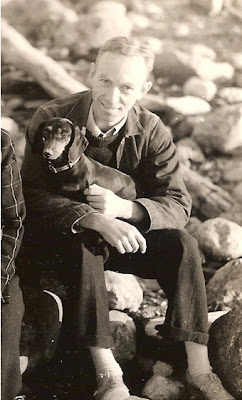
In 1951, E.B. White — the novelist responsible for, most notably, Charlotte's Web and Stuart Little — was accused by the ASPCA of not paying his dog tax and, as a result, "harboring" an unlicensed dog. He responded by way of the following delightful letter.

E.B. White & MinnieSource: Letters of a Nation; Image: E.B. White with his dachshund, Minnie, via Mister Crew.

12 April 1951

The American Society for the Prevention of Cruelty to Animals
York Avenue and East 92nd Street
New York, 28, NY

Dear Sirs:

I have your letter, undated, saying that I am harboring an unlicensed dog in violation Minnieof the law. If by "harboring" you mean getting up two or three times every night to pull Minnie's blanket up over her, I am harboring a dog all right. The blanket keeps slipping off. I suppose you are wondering by now why I don't get her a sweater instead. That's a joke on you. She has a knitted sweater, but she doesn't like to wear it for sleeping; her legs are so short they work out of a sweater and her toenails get caught in the mesh, and this disturbs her rest. If Minnie doesn't get her rest, she feels it right away. I do myself, and of course with this night duty of mine, the way the blanket slips and all, I haven't had any real rest in years. Minnie is twelve.

In spite of what your inspector reported, she has a license. She is licensed in the State of Maine as an unspayed bitch, or what is more commonly called an "unspaded" bitch. She wears her metal license tag but I must say I don't particularly care for it, as it is in the shape of a hydrant, which seems to me a feeble gag, besides being pointless in the E.B. White & Minniecase of a female. It is hard to believe that any state in the Union would circulate a gag like that and make people pay money for it, but Maine is always thinking of something. Maine puts up roadside crosses along the highways to mark the spots where people have lost their lives in motor accidents, so the highways are beginning to take on the appearance of a cemetery, and motoring in Maine has become a solemn experience, when one thinks mostly about death. I was driving along a road near Kittery the other day thinking about death and all of a sudden I heard the spring peepers. That changed me right away and I suddenly thought about life. It was the nicest feeling.

You asked about Minnie's name, sex, breed, and phone number. She doesn't answer the phone. She is a dachshund and can't reach it, but she wouldn't answer it even if she could, as she has no interest in outside calls. I did have a dachshund once, a male, who was interested in the telephone, and who got a great many calls, but Fred was an exceptional dog (his name was Fred) and I can't think of anything offhand that he wasn't interested in. The telephone was only one of a thousand things. He loved life — that is, he loved life if by "life" you mean "trouble," and of course the phone is almost synonymous with trouble. Minnie loves life, too, but her idea of life is a warm bed, preferably with an electric pad, and a friend in bed with her, and plenty of shut-eye, night and days. She's almost twelve. I guess I've already mentioned that. I got her from Dr. Clarence Little in 1939. He was using dachshunds in his cancer-research experiments (that was before Winchell was running the Katharine & E.B. White and Minniething) and he had a couple of extra puppies, so I wheedled Minnie out of him. She later had puppies by her own father, at Dr. Little's request. What do you think about that for a scandal? I know what Fred thought about it. He was some put out.

Sincerely yours,
E.B. White

Source: http://www.lettersofnote.com/2012/02/she-doesnt-answer-phone.html


Also, see:
Recommended Books/DVDs

Digg Delicious StumbleUpon Reddit BlinkList Furl Tumblr Facebook Google Bookmark Google+
Read more...

10 Compelling Reasons to Add a Shelter Dog to Your Life  

Posted by — Kim in , , , , , , , , ,

Here's a great article that I thought I would pass on. Merry Christmas! –Kim

Don't Buy – ADOPT a Shelter Dog
by Julia Szabo

If you haven't already experienced the joy of dog adoption, there's no time like the present to save a K9 life, and upgrade your own in the process.

I should know: I've been adopting dogs from shelters since 1994, when I brought home my very first pit bull, a white vision of beauty named Daisy. Since then, I've adopted dozens of dogs in every imaginable color, shape, and size. Some of them I rehomed; many wound up staying with me.

Shelter dogs have taught me more lessons about life and love than I can count or recount here. This much I can tell you: There's no nicer, more unpretentious teacher than a shelter dog! Daisy was also a brilliant literary coach, motivating me to achieve every young writer's dream: placing an article in The New Yorker.

Shelter dogs also impart excellent design advice. Thanks to my adopted dogs, I was able to summon the courage to write my first book, Animal House Style: Designing a Home to Share With Your Pets. They also inspired all my other books about pets and design.

Shelter dogs are natural-born decorators; they vote with their feet, and they don't charge a fee. Plus, they are wonderful to sleep with, especially when the weather turns cold. Shelter dogs are great in bed. At my place, every night is a four-dog night!

A visit to your local animal shelter or Dogster's adoption center (powered by Petfinder.com) will get you started on the road to K9 redemption. Need incentive? Here are 10 compelling reasons to adopt a shelter dog. What are you waiting for?

10 Compelling Reasons to Add a Shelter Dog to Your Life

  1. As the environmentally conscious recycling movement has proven, it's easy (and fun!) being green, and dog adoption is the noblest form of recycling. One person's trash (boo!) is another's treasured pet.
  2. Every year, millions of healthy, sweet, soulful dogs are killed at animal shelters across this country just for lack of cage space; as with people, bad luck can cause good dogs to become homeless through no fault of their own. By adopting a shelter dog, you're doing your part to help end the nationwide crisis of homelessness.
  3. With so many charismatic celebrities walking around with adopted dogs by their side — Lenny Kravitz among them — it's clear that adoption isn't just the right thing to do, it's the cool thing to do. To your adopted dog, you're the resident rock star!
  4. You know all those people who are so proud of their honor-student kids? Well, adopted dogs are super-smart, the Mensas of muttdom. So skip the bumper sticker — flaunt stray pride with a cool collar or T-shirt. Even your coffee mug can proclaim pride for pound pups!
  5. Don't you want somebody to love? Somebody who will actually love you back? For anyone who's ever suffered the pangs of unrequited affection — and who hasn't? — rest assured that an adopted dog will return those tender feelings tenfold. No more lonely nights!
  6. If you've had it up to here with criticism from your nearest and dearest, get used to unconditional K9 adoration. Years of psychotherapy can't hold a candle to an adopted dog's uncomplaining, adoring presence. "Dinner's late? Again? I adore you!"
  7. Got performance anxiety about trying out a new hobby or activity? With an adopted dog as your nonjudgmental audience or workout partner, there's nothing to fear: From exercise routines to gourmet cooking to knitting, your efforts will get an A+ even if they deserve a D!
  8. Adopting a dog proves you're a person of great inner depth who values substance (a mystery dog of unknown parentage) over style (a predictable pedigreed purebred).
  9. But hey, if you're a style hound, there's no more stylin' statement than a shelter dog — s/he coordinates beautifully with any outfit or style of decor!
  10. Are you a political animal? Then reaffirm your faith in the democratic process with an adopted dog. After all, shelter mutts are the people's dog: E Pluribus Unum, one dog out of many. Uncle Sam wants YOU to adopt today!

About the Author: The author of six books, Julia Szabo writes Dogster's Living with Dogs column and is a pet expert for Howcast.com.

Source: http://dogblog.dogster.com/2011/10/03/10-compelling-reasons-to-add-a-shelter-dog-to-your-life/?v=1


Also, see:


Digg Delicious StumbleUpon Reddit BlinkList Furl Tumblr Facebook Google Bookmark Google+
Read more...

The New Puppy  

Posted by — Kim in , , , , ,

Here's a really cute pic that I thought I would pass on...how true to life! –Kim

I guess I'll just sleep over here, then...

Source: http://www.stumbleupon.com/su/2MZUb4/www.helloadorable.com/blogs/helloadorable/i-guess-ill-just-sleep-over-here-then-552

Digg Delicious StumbleUpon Reddit BlinkList Furl Tumblr Facebook Google Bookmark Google+
Read more...

Nativity Scene & a Dog  

Posted by — Kim in , , , , , , , , , ,

What an amazing picture! –Kim

Sleep in Heavenly Peace

A Nativity Scene was erected in a church yard. During the night, the folks came across this scene.

An abandoned dog was looking for a comfortable, protected place to sleep. He chose baby Jesus as his comfort. No one had the heart to send him away, so he was there all night.

Maybe we should all have the good sense of this dog and curl up in Jesus' lap from time to time.... Not to mention the dog's breed was a "shepherd!"

Merry Christmas!

Source: http://puppycam.yuku.com/reply/193005/t/Re-Holiday-Photos.html

Digg Delicious StumbleUpon Reddit BlinkList Furl Tumblr Facebook Google Bookmark Google+
Read more...

Tips to Keep Your Pets Safe This Winter  

Posted by — Kim in , , , , , , , , , , , , , , , , , ,

Here's a great article that I thought I would pass on...hope you find it informative! –Kim

Cold Weather Hazards that Threaten Your PetDec. 10, 2010
As temperatures continue to plummet, pet owners must ensure the safety and well-being of their animals.
Shelter, food and water: Cats should be kept inside at all times, year-round, to protect from the many life-threatening dangers always present outside. Dogs should also live inside. However, if your dog spends a lot of time outside, you are required by law to provide proper shelter. Outdoor dogs also need bedding and additional fat in their diets during the winter to help build up natural insulation. Make sure your pet has plenty of fresh, clean water in a secure, non-tip dish at all times. Check the water bowl frequently to make sure that it hasn't frozen.
Keep them safe: Snow and ice increase an animal's chances of becoming disoriented and lost if roaming the streets. Bad weather conditions make it extra difficult for cars to stop, increasing the animal's chance of getting hit. Keeping pets indoors and walking your dog on a leash will prevent such tragedies.
Beware of ice, salt, and snow: Jagged ice and sidewalk salt can injure or irritate a dog's foot pads. After returning home from a walk, check the foot pads and wipe off any salt or ice with a damp towel. Also, dry your dog thoroughly whenever it comes in from the snow. Consider using doggy boots for little feet.
Danger of frostbite: Even though dogs and cats have a fur coat, most cannot endure severe cold for more than 10 to 15 minutes. A companion animal left outdoors can get frostbite and even freeze to death. Signs of frostbite include skin that is pale and cool to the touch, with decreased sensation in the affected area. If you suspect frostbite, gently warm the area with warm, not hot, water and then take the animal to a veterinarian. After thawing, there may be pain or redness on the frostbitten area. Once an area has been frozen it can become cold and frostbitten again more easily. Consider a doggy coat for your smaller canine friend.
Keep away from anti-freeze: Animals are attracted to this substance by its sweet taste. It can be fatal if ingested, so keep all anti-freeze bottles out of your pet's reach. Also be sure to clean up any spills in your garage or driveway immediately. If your cat or dog should swallow anti-freeze – or any poison – contact your veterinarian immediately.
Honk car's horn: In cold weather, cats allowed outdoors may crawl beneath cars and climb up inside the engine compartment seeking warmth and shelter. This can lead to injuries or death when the engines are started. To prevent such an occurrence, keep your cat indoors at all times. To protect stray cats, knock on your car's hood or sound your horn before starting the car in cold weather.
Keep them groomed: Animals tend to shed hair less during the cold months, but still require regular brushing. Cats generally do not need a bath – they clean themselves. Dogs should be bathed only if needed and not more than once a month. When bathing any animal, be sure to use a shampoo that is specifically safe for a cat or dog and follow label directions completely.
Holiday hazards: Mistletoe, holly and poinsettias are all poisonous to pets. Make sure your holiday tree is steady so it can't be knocked over. Protect your cat or dog from drinking stagnant Christmas tree water, eating candy, chocolate or potentially injurious ornaments, tinsel and trimming, or nibbling on the cords from decorations. Keep an eye on your pets to make sure they don't slip out the door as your visitors come and go. Do not give a cat or dog as a gift. Give a gift certificate for a pet adoption from a shelter and allow the recipient to select an animal that is appropriate for their lifestyle. Make sure your pet has a variety of toys or make your own.
 
Source: http://couriernews.suntimes.com/news/2767099-417/dog-animal-cat-cats-cold.html
© Copyright 2010 Sun-Times Media, LLC


Also, see:

Digg Delicious StumbleUpon Reddit BlinkList Furl Tumblr Facebook Google Bookmark Google+
Read more...

Quotes & Queries  

Posted by — Kim in , , , , , , , , , , , , , , , , ,

Here's a great collection of facts that I thought I would pass on...hope you find them interesting! –Kim

Interesting Dog Facts - Part 1

A puppy's eyes do not open until it is 10 to 15 days old. Its vision is usually not complete until it is about four weeks old.

At birth, puppies are deaf, blind and have almost no sense of smell. They stay near their mother and siblings because of the warmth.

Puppies should remain with their mother until they are at least eight weeks old. During this time, she will teach them not to bite and how to get along with other dogs.

Dogs are submissive to those they feel have higher pack status.

Train your dog from day one, so she will think of you as the leader of the pack. Dogs instinctively want to earn the pack leader's approval.

The most confident puppy in a litter often makes the worst pet because he sees himself as the pack leader.

A dog can suffer from a poor self-image, just like humans. Bolster self-esteem with praise, affection and rewards.

To a young dog, exercise and play are the day's most important events. As a dog gets older, he lives for dinner time.

Even after your dog is old enough to be fed only once a day, he should be given a morning snack just to calm his rumbling tummy.

Family dogs who growl when family members are roughhousing aren't upset, they're just asking to become part of the game.

Give your new puppy its own sleeping den, even a simple cardboard box will do; this will make her feel more secure.

Ignore your new puppy's whining when you first isolate it for sleeping. If you don't you will only encourage it to whine more.

Sign up your dog for obedience school.

The most important thing you can teach your dog is to sit and stay on command. Anytime you are having behavioral problems with your dog, begin your training by reteaching him to sit and stay.

The time to start teaching your dog to sit and stay is the day you bring her home.

Don't attempt to teach your dog anything else until he will sit and stay on command for at least one minute.

When teaching a puppy to come, begin by getting down to his level so he will not be encouraged to jump up on you.

A dog needs to work off excess energy every day.

Mixed-breed dogs usually have behavioral traits similar to the breed they most resemble in appearance.

When a small dog is aggressive toward people, don't pick him up. This only reinforces the behavior since he will see it as a reward.

Teach your dog to play catch.

Anyone can buy a dog, but it takes a kind owner to set its tail wagging.

Although a dog might be jealous of a new puppy in the beginning, this usually passes quickly since dogs are social animals.

Dogs become loyal, not because you feed them, but because of the companionship you give them.

Give your small or short-haired dog a sweater for winter walks.

Most dogs don't like to be left alone, so they howl. Leave the radio or television on to keep your dog company when you are away.

Dogs have twice as many muscles for moving their ears as people.

Housebreaking a puppy is just like toilet-training a child. First, you learn to recognize the signs; then, you react every time you see them.

Man could learn much from his dog: to be a true friend, to be faithful and to appreciate those who love him.

When a puppy is removed from its mother, don't make it spend the first night alone. Its loss of family is enough for one night.

As soon as your new pet is comfortable with its new home, move it to the location where you will want it to sleep for its lifetime.

A dog's nose is not just used for smelling, but also to keep him cool. That's why a dog pants. The longer the dog's nose, the better his cooling system works.

Dogs that chase cars have learned that cars run away. This behavior is reinforced each time he chases one away.

Teach your dog to fetch.

Never wake a sleeping dog by poking or shaking it.

Dogs are perfect companions. They never quarrel, fuss or fight with you, and they listen with great interest any time you speak in their direction.

A dog's smile runs from the depth of his eyes to the tip of his tail.

If you're finding it difficult to teach your dog to catch a ball, try tossing something soft like a knotted piece of fabric instead. Some dogs find softer items easier to catch.

Dogs love rituals and routines.

Anyone who says he works like a dog obviously doesn't own one.

Staring directly into the eyes of a strange dog may be interpreted as a challenge and may actually encourage the dog to bite you.

Dogs and cats turn in circles before lying down, because in the wild, this instinctive action turns long grass into a bed.

When walking your dog, put a few plastic bags in your pocket; they make great "scoopers." Slip one over your hand, pick up the pile, flip it inside out, tie and discard.

The average dog's mouth exerts 150 to 200 pounds of pressure per square inch. Some dogs can apply up to 450 pounds.

Puppies can't control their bladders overnight until they are at least four months old. Until then, cover the floor around the puppy's bed with newspapers.

Dogs are omnivorous. They need more than just meat to flourish.

People with more than one dog shouldn't try to treat them all as equals. Because pack position is important to a dog, this only encourages jealousy games.

All dog owners should buy a long-handled pooper-scooper. It makes keeping the yard clean a breeze.

Dogs chew up your underwear because it smells like you.

You don't have to put up with your dog destroying flower beds or digging up the yard; simply fence off a separate section just for him.

Always say your dog's name before you give a command.

One in every three US families owns one or more dogs.

Choke chains can be dangerous.

A one-year-old dog is physically as mature as a 15 year-old human.

Dogs' internal clocks are really magnificent. They know when it's time for you to arrive home, feed them, or go to bed if you are normally on a schedule.

Brush your dog 3 times a week in the spring, and you'll have a summer free from shedding.

If someone in your household is allergic to dogs, bathe your dog every week. He will shed less dry skin. You can also add a teaspoon of cooking oil to your dog's dinner.

The only problem with loving a dog is that they live for only a short time.

If your dog reacts anti-socially toward visitors, put her in another room until she calms down. When you let her out, ignore her. This forces your dog to go to the visitors to get their social activity.

When a dog bays at the moon, it is following a basic urge to call the pack together.

Rituals are a basic part of canine behavior. Greeting, feeding, hunting and sleeping all include social performances.

The burying of bones is part of a dog's instinctive feeding ritual; shaking things viciously is part of the hunting ritual.

Source: http://www.dogquotes.com/dogfacts.htm
Copyright © 2001-2008 Australian Media Pty LTD


See Part 2: http://topdogblog1.blogspot.com/2010/04/quotable-quotes.html

Digg Delicious StumbleUpon Reddit BlinkList Furl Tumblr Facebook Google Bookmark Google+
Read more...

A Good Dog Bed is Essential  

Posted by — Kim in , , , , , , ,

Here's a great article that I thought I would pass on...hope you find it helpful! –Kim
   

Why Every Dog Needs a Bed
Your furry family member needs a warm, comfortable bed for the same reasons you do. A dog bed allows your pet to have his own space – a place to get a good night's sleep, relax when he is tired, or enjoy a safe, quiet retreat when life gets too hectic. It also provides him with insulation from a cold, hard floor and cushioned support for joints and bones.
Dog beds serve a practical purpose for dog owners, too – they help keep your canine off your sofa and bed and help contain pet hair and dander in one place.

How to pick the right bed for your dog
Make sure the bed is big enough. The bed should be large enough to support his entire body. Try measuring your dog and add five inches to ensure a comfortable fit.
Consider your dog's specific sleeping habits. Does he like to rest his head on a pillow or the arm of a sofa? If so, look for a bed with a raised side (see picture above). Does he like to burrow and nest? A soft, pillow-type bed or a "cave" may be the best choice (left).
Invest in quality. Orthopedic foam beds may be more expensive, but they provide superior support for bones and joints, hold their shape longer and will not need to be replaced as quickly as beds with traditional polyester filling or cedar chips.
Choose easy care fabrics. If your dog sheds or drools, you'll want a bed with an inner pillow that is reversible and machine-washable. If your dog chews everything to shreds, try a Kuranda bed.
In the colder weather or climates, consider a safety-tested heated dog bed. Or, in hot weather or climate areas, think about a safe cooling dog bed.
Get an outdoor-safe bed for an outdoor dog. If your dog spends a lot of time outside or sleeps in a doghouse, look for materials treated to eliminate mold, fungus and other outdoor hazards that may be harmful to your dog.
Where you place your dog's bed is important, too. Just remember, it's his resting place, so try to avoid a high traffic area of your home. Choose a room where you spend a lot of time, so your pooch can always be nearby. If your dog still uses a crate, you might want to put his bed inside the crate.
A good dog bed is not a luxury – it's an essential piece of furniture. So, take the time to find the right one. After all, you want the bed and the benefits it provides, to last a long time.
Source: Pedigree
© 2009 Mars, Incorporated and Affiliates

Digg Delicious StumbleUpon Reddit BlinkList Furl Tumblr Facebook Google Bookmark Google+
Read more...

List of No-kill Shelters and Rescues

List of No-kill Shelters and Rescues: 
NATIONAL SEARCH
Find local shelters near you! LOCAL SEARCH
You can adopt or foster from any of these shelters or donate to support their efforts. Be sure to confirm that they are a "no-kill" shelter. Then, be a part of the solution!

<< – Newer Posts / Older Posts – >>
CLICK HERE FIRST; THEN CLICK THE PAGE LINK BELOW.