Showing posts with label toys. Show all posts

Easy-to-Make Dog Toys  

Posted by — Kim in , , , , , ,

Here's a great money-saver I thought I would pass on...hope you find it helpful! –Kim

Easy-to-Make Dog Toys

Want to create easy to make dog toys that your pooch will love? It's simple! With some materials that you can find around your house or buy in the craft store, you can make dog toys that will provide your furry friend with hours of entertainment – and you don't have to be Martha Stewart to do it.

We all want our dogs to have the best dog toys, but have you ever felt that those expensive pet store toys just don't hold up to your little Buddy's gnawing, tugging, biting and chewing?

What fun is it to buy your dog a toy, only to find scraps of fuzz and bits of plastic scattered around the house a couple of days later?

Fortunately, dogs don't care about the cost of a gift or whether it was bought at a chic doggy boutique. All they care about is whether they can have fun with it! With the easy-to-make dog toys below, you will definitely be a hero in your pooch's eyes!

Safety First

When making your own dog toys, be sure to follow these safety tips:
  • Be sure the toy is durable enough to stand up to your dog's chewing strength and level of play.
  • Be sure that any squeakers are safely concealed within the toy.
  • Avoid squeakers and stuffing altogether if your dog likes to rip apart his toys.
  • Steer clear of using any choking hazards in your toys, such as string, ribbons or buttons.
  • Always supervise your dog to make sure he will not destroy the toy
  • Be watchful for any torn, shredded or broken parts and remove the toy immediately if there are any.

"Recipes" for Easy-to-Make Dog Toys

"Sock Full 'o Balls"
  1. Stuff 2 tennis balls into a large, clean gym sock.
  2. Tie a knot in the sock just above the balls, so they are tightly secured in the foot of the sock.
  3. For added amusement, use tennis balls with squeakers or bells inside.
  4. Watch your dog have fun grabbing the sock and shaking the balls!
Simple Rope Toy
  1. Begin with a sturdy piece of rope about 12" long.
  2. Tie a knot at each end of the rope.
  3. If you want to be eco-friendly, use hemp for the rope!
Simple and fun!

"Rope-a-Dope"
  1. Choose a sturdy rope made of tightly braided material.
  2. Wrap the rope around a tennis ball until the ball is fully encased in the rope, leaving a "tail" of about 16" of rope.
  3. Loop the end of the rope and tie a sturdy not, creating a "handle" about 4" in diameter and leaving about 12" of rope between the tennis ball and the knot of the handle.
This makes a great tug toy!

Mama's Little Helper
  1. Start with a nice, soft fabric, such as fleece, velour, crushed velvet or faux fur.
  2. Choose the desired size of the toy, depending upon the size of your dog.
  3. Cut the fabric into a two equal shapes (simple shapes such as a bone, heart or gingerbread man work well).
  4. Sew the two shapes together, leaving an opening for stuffing.
  5. Stuff with soft material and, if your dog will not rip the toy apart, include a squeaker.
  6. Sew the remainder of the toy together.
  7. If you know how, you can even embroider a message onto the toy, such as "love" or "fetch".
Voila! Your dog will have a soft, comforting toy to cuddle with when he's not cuddling with you!

You could also substitute a stronger fabric such as denim or canvas.

NOTE: This toy is not for strong chewers or dogs that like to rip their toys apart!

Tennis Ball Tug Toy
  1. Drill a hole through a tennis ball.
  2. Thread a rope about 12" long through the ball.
  3. Tie the ends of the rope into a sturdy knot.
Great for "tug 'o war"!

If you want a great selection of fun fabrics for your easy to make dog toys, visit Fabric.com
 .
And if your dog loves more complex, "brain teaser" toys, be sure to check out our page on dog puzzle toys. We also have a list of special suggestions for site-impaired dogs on our toys for blind dogs page.

Source: The Happy Dog Spot
Copyright 2008-2012 The Happy Dog Spot


Also, see:

Digg Delicious StumbleUpon Reddit BlinkList Furl Tumblr Facebook Google Bookmark Google+
Read more...

Blind Kellar Plays Fetch  

Posted by — Kim in , , , , , , ,

Here are 2 great videos that I thought I would pass on... Blind dogs make GREAT pets! –Kim

Blind Dogs Make Great Pets!

Kellar was originally trained to play ball with the commands "hot" and "cold". The owner later added "warmer," "passed it," "left" and "right." The process took about a week for the basic commands.

Check out the heartwarming video below:


https://www.youtube.com/watch?v=Ha92yzmVv2s

And, here's the sequel!...


https://www.youtube.com/watch?v=slDtJxcLPDg


Also, see:
 

Digg Delicious StumbleUpon Reddit BlinkList Furl Tumblr Facebook Google Bookmark Google+
Read more...

Dog Bites BPA & BPS  

Posted by — Kim in , , , , , , , , , , , , , , , , , , ,

Having lost a dear companion to cancer from BPA toys, this topic is very important to me. –Kim

Chemicals Leak from Plastic Training Toys


Dogs that chew on plastic training devices and toys may be exposed to hormone-altering chemicals. Bisphenol A (BPA) and Phthalates – ingredients of hard plastics and vinyl – readily leach from bumper toys, which are used to train retrieving dogs. But Bisphenol S (BPS), the chemical now being used in place of BPA in many "BPA-free" products, may be just as harmful – if not more harmful – than BPA.


By Lindsey Konkel
Environmental Health News
Nov. 29, 2012

Dogs that chew on plastic training devices and toys may be exposed to hormone-altering chemicals, according to research at Texas Tech University.

The researchers found that Bisphenol A (BPA), Bisphenol S (BPS) and Phthalates – ingredients of hard plastics and vinyl – readily leach from bumper toys, which are used to train retrieving dogs.

The new study is one of the first to examine dog products as a potential source of exposure for pets. No one knows, though, whether the traces of the chemicals pose any health risk to dogs. Previous research has focused on the risks to infants and toddlers from baby bottles, toys and other items that contained the chemicals.

"A lot of plastic products are used for dogs, so to understand the potential for some of the chemicals to leach out from toys is a new and important area of research," said veterinarian Safdar Khan, senior director of toxicology research at the ASPCA's Poison Control Center in Illinois. Dr. Khan was not involved in the current study.

Philip Smith, a toxicologist at The Institute of Environmental and Human Health at Texas Tech, became interested in chemical exposures from bumpers after using them to train his own Labrador retrievers.

Retrieving dogs often are trained with plastic bumpers,
which when chewed can leach hormone-disrupting chemicals.
"Some of the dogs are exposed to plastic bumpers from the time they are born until the day they die. We all want our pets to be healthy," said Smith, co-author of the as-yet unpublished study, which was presented this month at the Society of Environmental Toxicology and Chemistry conference in California.

"A lot of plastic products are used for dogs, so to understand the potential for some of the chemicals to leach out from toys is a new and important area of research," stated Dr. Safdar Khan.

In humans and rodents, BPA, BPS and phthalates have been linked to a number of health issues, including impaired development of reproductive organs, decreased fertility and cancers. The United States and the European Union have banned some phthalates in children's toys, and in July, the U.S. Food and Drug Administration banned BPA in baby bottles and sippy cups.

The researchers, led by Kimberly Wooten, a graduate student in environmental toxicology at Texas Tech, studied factors that affected how much BPA, BPS and phthalates leached from plastic bumpers into dishes filled with artificial dog saliva.

They tested orange and white bumpers from two unidentified makers. The bumpers subjected to simulated chewing leached more BPA, BPS and phthalates than brand new bumpers and those left outside to weather for a month.

Researchers said they suspect that the levels of chemicals observed from the bumpers would be considered very high when compared with children's toys.

Since simulated saliva was used, it is difficult to say how much actual leaching would occur in a dog's mouth, the researchers said. "We don't have enough information at this time to begin to estimate actual exposure," Smith said.

Smith said they suspect that the levels of chemicals observed from the bumpers would be considered very high when compared with children's toys.

Using artificial saliva, researchers
simulated a dog chewing a bumper.
The researchers also looked at phthalates, BPA and BPS from pet toys sold through major retailers. They found higher concentrations leaching from bumpers than from other toys but preliminary results suggest some store-bought toys might have leached other hormonally-active chemicals.
A previous study by the Environmental Working Group found that dogs' blood and urine contained the breakdown products of several phthalates at levels ranging from 1.1 to 4.5 times higher than the average found in people.

"Dogs are closer to the ground than humans, so house dust is another potential source of exposure to environmental chemicals," Dr. Khan said.

But little is known about any potential health risks for dogs exposed to hormone-mimicking chemicals.

Since little toxicity data exist for dogs, it is difficult to evaluate risks, Smith said. Nonetheless, "consumer education about potential risk seems to be warranted based on our data," he said.

Source: Environmental Health News
Copyright © 2011-2012 Environmental Health Sciences


Also, see:

    Digg Delicious StumbleUpon Reddit BlinkList Furl Tumblr Facebook Google Bookmark Google+
    Read more...

    Teach Your Dog to Catch a Frisbee  

    Posted by — Kim in , , , , , , , , , , , ,

    Here are some more great videos by trainer Heather & the amazing Jesse! –Kim

    How to Teach your Dog to Catch a Frisbee®


    Amazing Dog Trick: Double Dutch Jump Rope

    More Useful Dog Tricks

    NOTE: Heather (the owner/trainer) trains Jesse (the Jack Russell Terrier) with 100% positive reinforcement....

    Also, see:

    Digg Delicious StumbleUpon Reddit BlinkList Furl Tumblr Facebook Google Bookmark Google+
    Read more...

    Tips to Keep Your Pets Safe This Winter  

    Posted by — Kim in , , , , , , , , , , , , , , , , , ,

    Here's a great article that I thought I would pass on...hope you find it informative! –Kim

    Cold Weather Hazards that Threaten Your PetDec. 10, 2010
    As temperatures continue to plummet, pet owners must ensure the safety and well-being of their animals.
    Shelter, food and water: Cats should be kept inside at all times, year-round, to protect from the many life-threatening dangers always present outside. Dogs should also live inside. However, if your dog spends a lot of time outside, you are required by law to provide proper shelter. Outdoor dogs also need bedding and additional fat in their diets during the winter to help build up natural insulation. Make sure your pet has plenty of fresh, clean water in a secure, non-tip dish at all times. Check the water bowl frequently to make sure that it hasn't frozen.
    Keep them safe: Snow and ice increase an animal's chances of becoming disoriented and lost if roaming the streets. Bad weather conditions make it extra difficult for cars to stop, increasing the animal's chance of getting hit. Keeping pets indoors and walking your dog on a leash will prevent such tragedies.
    Beware of ice, salt, and snow: Jagged ice and sidewalk salt can injure or irritate a dog's foot pads. After returning home from a walk, check the foot pads and wipe off any salt or ice with a damp towel. Also, dry your dog thoroughly whenever it comes in from the snow. Consider using doggy boots for little feet.
    Danger of frostbite: Even though dogs and cats have a fur coat, most cannot endure severe cold for more than 10 to 15 minutes. A companion animal left outdoors can get frostbite and even freeze to death. Signs of frostbite include skin that is pale and cool to the touch, with decreased sensation in the affected area. If you suspect frostbite, gently warm the area with warm, not hot, water and then take the animal to a veterinarian. After thawing, there may be pain or redness on the frostbitten area. Once an area has been frozen it can become cold and frostbitten again more easily. Consider a doggy coat for your smaller canine friend.
    Keep away from anti-freeze: Animals are attracted to this substance by its sweet taste. It can be fatal if ingested, so keep all anti-freeze bottles out of your pet's reach. Also be sure to clean up any spills in your garage or driveway immediately. If your cat or dog should swallow anti-freeze – or any poison – contact your veterinarian immediately.
    Honk car's horn: In cold weather, cats allowed outdoors may crawl beneath cars and climb up inside the engine compartment seeking warmth and shelter. This can lead to injuries or death when the engines are started. To prevent such an occurrence, keep your cat indoors at all times. To protect stray cats, knock on your car's hood or sound your horn before starting the car in cold weather.
    Keep them groomed: Animals tend to shed hair less during the cold months, but still require regular brushing. Cats generally do not need a bath – they clean themselves. Dogs should be bathed only if needed and not more than once a month. When bathing any animal, be sure to use a shampoo that is specifically safe for a cat or dog and follow label directions completely.
    Holiday hazards: Mistletoe, holly and poinsettias are all poisonous to pets. Make sure your holiday tree is steady so it can't be knocked over. Protect your cat or dog from drinking stagnant Christmas tree water, eating candy, chocolate or potentially injurious ornaments, tinsel and trimming, or nibbling on the cords from decorations. Keep an eye on your pets to make sure they don't slip out the door as your visitors come and go. Do not give a cat or dog as a gift. Give a gift certificate for a pet adoption from a shelter and allow the recipient to select an animal that is appropriate for their lifestyle. Make sure your pet has a variety of toys or make your own.
     
    Source: http://couriernews.suntimes.com/news/2767099-417/dog-animal-cat-cats-cold.html
    © Copyright 2010 Sun-Times Media, LLC


    Also, see:

    Digg Delicious StumbleUpon Reddit BlinkList Furl Tumblr Facebook Google Bookmark Google+
    Read more...

    9 Tips for a Chic, Pet-friendly Home  

    Posted by — Kim in , , , , , , , , , , , , , ,

    Here's a great article that I thought I would pass on...hope you find it interesting! –Kim

    Your Home can be Beautiful and Pet-friendly with these Pointers from Design Experts
    By Leanne Potts
    A lot of stylish people are letting their houses go to the dogs and the cats and the birds – without sacrificing style or comfort. Instead of banishing their furry friends to the yard, many pet owners are decorating and remodeling their living spaces with their pets' needs in mind, turning pet-friendly decorating into a full-blown trend.
    "You can have a beautiful house and a pet, too," says Julia Szabo, pet columnist for the New York Post and author of Animal House Style: Designing a Home to Share with Your Pets.
    "The key is choosing the right materials and accommodating your animals' needs." Julia, who shares her digs with a dozen rescued dogs and cats, says an animal-friendly house is more comfortable for humans, too. "If a house doesn't work with dogs, it won't work with children or guests, either."

    DO vacuum regularly.
    Even if you match your chaise to your Siamese so perfectly the hairballs are barely visible, vacuum kitty's hair off the furniture at least twice a week. You may need to vacuum daily when your pet is shedding.
    Pet hair has an odor, and it contains an oil that will attract dirt to the fabric on which it sits. She suggests you invest in a Dyson DC14 Animal, an upright vacuum named for its miraculous ability to suck up animal hair. It costs around $550, but Julia says you'll wonder how you ever lived without it when you see the horrifying amounts of dirt and hair the Dyson picks up from your floors and furniture.
    DO bathe and groom your pet often.
    Keeping your dog or cat clean will help your house stay cleaner, longer. Trimmed nails won't scratch floors or upholstery. Regularly brushing and bathing removes loose hair before it ends up on your floor, your bed, your throw pillows, your curtains. Furniture and rugs will last longer if they don't need to be washed as often. Think of it this way: It's easier to clean your dog than your upholstery, and it's usually more fun.
    DO use stain-resistant fabrics.
    Forget silk, chintz or the pet-hair magnet known as velvet. Discover the joys of Crypton, a nearly indestructible, synthetic fabric that's resistant to stains, smells, bacteria and muddy paws.
    William Wegman, the artist known for his Weimaraner photos, has designed a line of Crypton fabrics aimed at pet-obsessed style mavens that includes sturdy suedes and twills with names like Polka Dog and Material Dog. It's available in upholstery shops, from many furniture manufacturers and interior designers; you can find it online at cryptonfabric.com.
    Leather is a good choice, easy to clean and durable. Most grades of leather will suffer only scratches from Fido or Fluffy's claws, but hey, the scratches add patina. If you see a sad irony in buying a sofa made from an animal for your animal, try pleather. It's cruelty-free, relatively inexpensive and has a timeless appeal.
    Then there's Ultrasuede, a machine-washable microfiber that feels as smooth and seductive as real suede. "I can't say enough good things about Ultrasuede," Julia Szabo says. She has covered her 1950s Heywood-Wakefield sofa and chairs in Ultrasuede and even had a couple of pet beds made of it. "It's beautiful, and it always stays cool and comfortable no matter the climate. That's important for your and your animal's comfort." Velvet is a definite no-no for a home with pets. Ultrasuede is a stylish and easy-to-maintain alternative.
    DO put washable fabrics on your bed.
    If your dog or cat sleeps with you there will be accidents. "Cats barf a lot," Julia Szabo says. "Deal with it." Protect your mattress from the inevitable by covering it with a thick pad. Use cotton bedsheets, preferably in a medium color or a pattern that can hide the pet hair and stains between washings. For bedspreads, duvet covers work well because you can take them off and wash them regularly. Delicate-looking matelasse coverlets are surprisingly durable; their tight quilting resists pet toenail snags and repeated washings.
    DO skip wall-to-wall carpet.
    Carpet absorbs odors, traps pet hair and soaks up inevitable pet-related stains like a sponge. "I try to steer pet owners away from carpet," says Chicago interior designer Nan Ruvel, who designs animal-friendly interiors for clients and lives with three cats. "It's difficult to keep clean. It's a bad idea."
    If you must have carpet, she says, choose a low pile. "It's easier to clean if there's an accident." And avoid continuous loop carpet because a pet toenail can unravel it by catching a single woven loop.
    DO choose hard surface floors.
    Bare floors are the way to go, but bare doesn't have to be boring. Painted concrete is lovely and durable, as are terrazzo and brick. Hardwood floors are simple to mop or vacuum and add a warm glow to a room, but keep in mind that large dogs can scratch wood.
    The best floor is ceramic tile, because it's easy to clean and resistant to any stain an animal can dish out. Tile is toenail-proof, it makes a room look sleek and elegant, and it gives furry animals a cool place to nap during hot weather. Porous materials like marble or other natural stones aren't as pet-proof as other hard surfaces, since acids present in pet spit-up can stain them, even if they're sealed, designer Nan Ruvel says.
    DO match colors to your pet's fur.
    Your pet can be a source of inspiration when choosing colors for your room. Paint a concrete floor the same shade of gray as your cat. Cover your sofa in a honey microfiber that matches your golden retriever. This isn't just an aesthetic shout-out to your pet; it's also a practical choice because the hair they leave behind won't be as visible. "Put a white floor in a house with a black Lab, you're going to have black tumbleweeds everywhere," says Nan Ruvel.
    Julia Szabo tells of a New York artist who painted a room in his Manhattan digs a brilliant shade of green inspired by his Amazon parrot. "It reminds the parrot of his ancestral home in the jungle. The wall is gorgeous, and it makes the bird much happier," she says. Painting walls white is a bad idea aesthetically and practically, she says. "Let's face it; a white wall goes gray in a minute around dogs." This forces you to be more creative and daring when choosing colors, Julia says. "Pets present you with the opportunity to really work with color."
    DO give your pet tidy, attractive treats and toys.
    Dogs adore pig's ears and rawhide bones, but Julia Szabo says they're a bad idea. "They're hideous, they're smelly and they're as bad for your pet as they are for your floor," she says, pointing out they're coated in nitrates and leave greasy stains on floors and furniture.
    It's important to give your dog something to chew on, or he might go after a chair leg. Julia suggests rubber toys like the Kong or the Super-Tuff Rhino. For cats, Szabo recommends Everyday Studio's Cat Tree, a scratching post/climbing tree combo that hangs on the wall. It's a chic, geometrically shaped concoction of colored metal and cardboard that offers a stylish alternative to homely, carpet-covered scratching posts and plywood climbing trees. "It's like a work of art for your pet; it's beautiful and it's functional," she says. Another option that will allow your cat to get out his inner panther, stylishly: shelves for him to perch on. Julia sells "Tiger Branches," a set of wooden demilune shelves that attach to the wall.
    DO set up an animal room near an entry.
    "It's important to consider your pet's lifestyle when you establish the layout of your house," Nan Ruvel says. "If your dog goes outside, make sure he can come back in through an area that's super-impervious." She just finished a project in which she converted a breakfast room into a mudroom for a client's two dogs. "She wanted a place where she could get dirt off them before they came in the house," she says. To do this, she put porcelain tile on the walls and floor of the breakfast room, which opened onto the backyard. She replaced the table with a banquette upholstered in stain-resistant fabric and equipped with under-the-seat storage for leashes and food. Nan also installed built-in shelves on the walls where the client could keep towels used to wipe the dirt off the dogs when they came inside from the yard.
     
    Source: http://www.hgtv.com/crafting/dog-gone-stylish/index.html
    © 2010 Scripps Networks, LLC

    Digg Delicious StumbleUpon Reddit BlinkList Furl Tumblr Facebook Google Bookmark Google+
    Read more...

    Who Says Dogs Can't Think?...  

    Posted by — Kim in , , , , , , , , , , ,

    ...Or Plot?!...
    This is so classic that I had to post it....
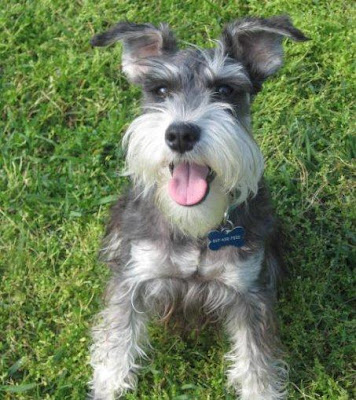
    I was on the phone this afternoon with one of my young-adult-single daughters*, who is currently living out of state with two of her own rescues – a Mini Schnauzer and little Doxie mix.
    My daughter was in the process of enjoying a rare lunch break at home before her upcoming, extremely arduous evening shift. As a struggling young songwriter, musician and performing artist carrying the pressures of a mortgage, utilities, car repairs, insurance and the various urgent needs of daily life on her own, lunches like this are a relative luxury, as her refrigerator is usually empty.

    Otis (the Schnauzer) was laying on the couch next to her, alternately eyeing her plate and chewing a squeaky toy. Suddenly, I heard her exclaim in an anxious voice, "OH, NO! There are two lost dogs running around in the street outside my house – a little Pug and a Weimaraner – without any collars!"
    My daughter watched the dogs for a minute, and I could feel, even through the phone lines, the pull on her heart for these two wanderers. Suddenly I heard her exclaim, "What?! They stopped and they're looking at my house! The window is open and they can hear the squeaky toy!" It seems the piercing squeak of the toy Otis was happily chewing was acting as a homing beacon, drawing the two lost dogs straight to her front door.
    "Oh, no! They're running into my yard! Oh my gosh!... They're… they're running right up on the front porch!!" I told her I'd call her back and hung up the phone. Several minutes passed....
    Not hearing anything and overcome with curiosity, I called her back after about fifteen minutes. A rather annoyed voice answered the phone. "Hello..."
    "So, what happened?" I asked.
    Otis"Well, when I went to the door, I heard someone calling them and they took off down the street. (Long painful pause.) Then I went back to sit down and finish my lunch... but... MY SANDWICH WAS GONE!"
    She continued forlornly, "I looked at Otis, who was QUIETLY sitting on the couch, looking very pleased with himself. 'Otis,' I said, 'did you eat my sandwich?' MOM... HE LOOKED AT ME ... AND BURPED!"
    I assured her, after unsuccessfully trying to contain my own amusement, that someday she will look back at this time in her life and laugh.
    But somehow, at least right now, she doesn't quite believe me.
    —Kim

    *Our three talented daughters live together with their own rescues: two Mini Schnauzers, a Dachshund, a Dachshund mix, a Chihuahua and little Terrier mix.

    Digg Delicious StumbleUpon Reddit BlinkList Furl Tumblr Facebook Google Bookmark Google+
    Read more...

    Toys for Your Dog that are Safe and Fun  

    Posted by — Kim in , , , , , ,

    Here are some great tips on pet safety... –Kim

    While Providing Fun, Don't Forget about Safety!

    There are plenty of toys on the market to keep your dog entertained for endless hours, but there are also a number of factors to consider when purchasing toys. As with children's toys, safety should be first and foremost in your thoughts when considering a new toy purchase for your dog.
    Some dogs are never happier than when they're chasing a ball. Many of the hunting and herding breeds will play ball all day and still come back for more. Some of the guarding breeds and terriers, on the other hand, will enjoy toys they can really bite and that respond with sound – so squeezy squeaky dog toys are very popular with them.
    Recently, there have been a number of news stories about recalls of unsafe childrens' toys originating in China, Mexico and other nations with poor safety standards. One of the biggest offenses was the presence of lead in the paint or enamel in children's toys. And, there is evidence of the same problem in dog toys; however, the safety standards for pet products is significantly lower than those for human use, so the problem was largly unreported. To be safe, buy American made toys, because of the higher safety approval standards (although, they are getting more difficult to find because of foreign price competition).

    Be sure not to give your dog a toy that can be broken up and potentially stuck in his throat! Dog toys, like dogs themselves, come in various shapes and sizes, and a ball that's safe for one dog can easily choke another.
    Dog toys should be durable, fun and safe. Hard rubber toys such as the "Kong" line of products can provide your dog with endless hours of chewing fun. The "Kong" comes in various colors and can be filled with a mixture of your dog's favorite treat or peanut butter!

    Be sure to check with your veterinarian to ensure that it is okay to feed your dog peanut butter. Also, be sure that any such toy has a hole at both ends to prevent your dog's tongue from getting stuck (by suction) while trying to remove every bit of the treat.
    Rope dog toys and rubber rings are always a bit hit with dogs that love to play fetch or tug-of-war. Playing "FRISBEE" can also provide hours of entertainment for dogs and owners alike!
    Dogs may also enjoy stuffed and furry toys, but be sure your pet cannot get at the stuffing inside as it can be a serious choking hazard. One good alternative is to buy special dog toys that have no stuffing. Another is to make your own toys, with or without stuffing.
    There are literally hundreds of dog toys on the market, just be sure to put safety first!
    Have fun!

    –Kim

    Digg Delicious StumbleUpon Reddit BlinkList Furl Tumblr Facebook Google Bookmark Google+
    Read more...

    List of No-kill Shelters and Rescues

    List of No-kill Shelters and Rescues: 
    NATIONAL SEARCH
    Find local shelters near you! LOCAL SEARCH
    You can adopt or foster from any of these shelters or donate to support their efforts. Be sure to confirm that they are a "no-kill" shelter. Then, be a part of the solution!

    << – Newer Posts / Older Posts – >>
    CLICK HERE FIRST; THEN CLICK THE PAGE LINK BELOW.