Showing posts with label children. Show all posts

39 Secrets Your Dog Won't Tell You  

Posted by — Kim in , , , , , , , , , , , , , , , , , , ,

Here's a great list that I thought I would pass on...very interesting! –Kim

39 Secrets Your Dog Won't Tell You

We asked animal behaviorists, nutritionists, veterinarians and pet groomers to shed some light on what your furry friends would tell you if they could.

By Michelle Crouch
Reader's Digest Magazine
May 2014

1. You think my tail wagging is always an invitation for you to pet me more. Wrong!
Italian researchers found that dogs wag their tails slightly to the right when they see something they like and to the left when they're confronted with something they want to back away from.

2. You might buy any old dog-grooming brush at the pet store...
...but you should really pick the right one for my coat. A rubber brush will promote circulation and loosen dirt. A bristle brush removes dead hair.

3. You're giving me too much food.
How can you tell? I don't seem motivated by food treats when you're trying to train me. Cut back, and I'll start to pay attention.

4. Grooming day means you bring out the big blow-dryer. Don't!
To make dogs like me look fluffy, shake a little cornstarch into the base of the fur and then brush. It will absorb oil and grease and detangle matted fur.

5. Please don't rush me when I'm going to the bathroom.
There's a reason dogs circle around before getting down to business: We have an instinct to be aligned with the earth's magnetic field before we poop. In fact, researchers watched 70 of us engage in 1,893 defecations over a two-year period just to figure this out.

6. You may think it's nice to let me sleep all day, but too much nap time can affect my personality.
A lot of behavioral problems can be solved by just taking your dog on a daily walk or by playing with your cat for 20 minutes every day.

7. Since I'm an old dog, I get to eat whatever I want, yes? No!
If I have arthritis, I'll be much happier if you give me a daily supplement that contains glucosamine and chondroitin sulfate, which protect joint cartilage. And switch me to a food formulated for an animal my age.

8. If you lose me...
...the first thing you should do is call every animal shelter within 100 miles of home, and visit the nearest shelters every day if you can. Many animal control bureaus euthanize animals if they go unclaimed for a specific amount of time. (For good measure, be sure to get me a microchip when I'm young.)

9. If you're getting me spayed...
...ask your vet if she can remove just my ovaries, not my uterus. A much less invasive procedure, it's the way cats and dogs are spayed in Europe, and many U.S. veterinarians have already made the switch.

10. Because I'm a creature of habit, even a subtle change in my behavior is a red flag that I might be sick.
So if it takes me an hour to eat my food instead of 60 seconds as usual, if I'm tiring out faster when we play, if there are more urine clumps in the litter box than usual, or if I seem to be drinking more water, call the vet right away.

11. There's no question that if you keep me inside and don't let me wander the neighborhood...
I'll have a better chance of living a longer life. I won't get hit by a car, stolen, or just plain lost. But once I've been allowed to roam free, it'll be hard to change me.

12. Please introduce me around when I'm young so I'm not afraid of strangers.
Some experts say I should meet 100 new people of different sizes, genders, and ethnicities in my first 100 days at home, even if it's just a quick greeting. Make sure you include people wearing hats and sunglasses, since those accessories can look awfully scary to me.

13. You may think it's cute when I rub my butt on the carpet...
...but it probably means that I'm itchy and would like to see a vet.

14. When you're choosing a new furry friend, ask a vet or trainer for simple tests you can do to gauge temperament.
For example, you can try rolling me over on my back to see how I handle it. If I really struggle, I'm probably going to be tougher to train than an animal who lies there placidly.

15. Forget the Milk-Bones!
If you want me to really pay attention when you're training me, use a treat that's moist, something so gross, you don't even want to hold it in your hand, like a piece of greasy chicken.

16. While some of us gulp down grass only if we've eaten something that doesn't agree with us and we're trying to regurgitate it...
...others of us just love to munch the lawn. So let me graze – just make sure the grass I'm eating is free of pesticides.

17. Beware, Mom, because I will eat your underwear...
...especially if they've been worn. Veterinarians surgically remove hundreds of pairs from dogs' bellies every year.

18. Please, please can I choose my own bed?
The most comfortable one will depend on how I sleep. Let me try out a few in a pet store. If I usually sleep with my legs sprawled out, I'll be more comfortable on a flat bed without side bumpers. But if I like to curl up, I'll probably love a bumper bed.

19. You say I'm great with kids, but...
...if I'm licking, pulling my ears back, turning my head away, or yawning (all signs of anxiety) while they play with me, I'm probably just barely tolerating them. If you keep letting them pull my tail, one of these days, I might lose it.

20. Hold those clippers!
No matter how high the mercury climbs or how long my hair is, I don't need to be shaved. My undercoat actually insulates me from heat, so it helps me stay cool. Just make sure you keep my coat brushed and mat-free to promote good air circulation.

21. If you leave me in the backyard when you're not home...
...don't fool yourself that I'm going to run around and have fun. The truth is, I'm probably going to sit in one spot and wait for you to return. Dogs are den animals, and many of us prefer to be inside, ideally with you.

22. I love to fetch and would like to learn how to catch a flying disc...
...but those hard plastic FRISBEEs can hurt my teeth and gums. Instead, look for a soft one at a pet store.

23. If I'm not used to strangers and you reach out toward me when you first meet me...
...your hand may as well be a meat cleaver. Instead, crouch down on one leg and look slightly away. Then let me approach you and give you a sniff.

24. Let's get one thing straight: Declawing is not the same as cutting our nails.
It's a hideous, painful surgery that's much more like amputating the last two knuckles of your fingers. If my scratching is really bad, try glue-on nail caps.

25. If I'm spraying "outside the box," I'm not being spiteful.
Something is stressing me out. It may be a new person, a new pet, or even a new piece of furniture in the house that seems to be encroaching on my territory.

26. I'm confused. When I jumped up on you earlier...
...you gave me such a nice pet. But now you're mad at me for jumping on Aunt Martha. Am I allowed to jump up or not?

27. If you let me on the furniture now, while I'm young and cute...
...I will always think it's OK, no matter how big I get.

28. What do you mean you can't teach an old dog new tricks?
My owner taught me to fetch the newspaper from the driveway and take it to him when I was ten.

29. Remember when I was little and you shoved my nose in a puddle of pee I left?
I have no idea why you did that. Instead, get me outside as quickly as possible and praise me whenever I pee outdoors.

30. Want me to learn to walk by your side on a leash?
Well, give me some incentive. As soon as I start to pull ahead, stop walking. When I turn and look back, offer me a treat right next to your leg. I'll quickly figure out I need to stay next to you in order to keep doing what I love most: moving and exploring.

31. If you're tired of finding pet hair on your sofa and want to keep me off...
...try a Scat Mat, which gives out a small, harmless electrostatic pulse when it's stepped on. Or buy a car mat and turn it upside down on your couch, so the little rubber prongs are facing up. I hate those.

32. When I bark, jump, and grab the towel off the countertop...
...I'm not trying to be bad. I'm just bored! I want your attention! Please, get off your smartphone and play with me.

33. If I'm a dog who is scared of thunderstorms or loud noises, get me a snug-fitting Thundershirt.
Or you can make your own. Wrap an Ace bandage across my chest, cross it over the top of my body and then back under, going over and under until it's midway down my back, and then secure it. The constant pressure against the middle of my body will help ease my anxiety and calm me down.

34. Remember, my digestive system is very different from yours.
Raisins and grapes can shut down a dog's kidneys. Other dangerous foods include chocolate, coffee, macadamia nuts and avocado.

35. Want my coat to be thick and shiny?
Make sure my diet has plenty of essential fatty acids. Most high-quality commercial pet foods have enough, but pets on low-quality foods or homemade diets that aren't balanced may develop a dull coat.

36. Every bag of pet food has an Association of American Feed Control Officials (AAFCO) statement on the label...
...although you might need a magnifying glass to read it. Look for one that says the food has undergone animal feeding trials rather than one that's been “formulated” by a computer. The trials are expensive, but they indicate that real dogs actually ate the food for six months with good results.

37. Check with a board-certified veterinary nutritionist before giving me a homemade-food diet.
Researchers at the University of California, Davis, who examined 200 recipes last year for home-prepared dog food found that 95 percent had some serious nutritional deficiencies.

38. Did you hear the hype about grain-free cat and dog food?
That's what it is: hype. There's nothing wrong with feeding me grains – they can actually be an important part of a balanced diet. Before you make any change, talk to your vet.

39. If you switch me to a raw diet, I may end up with cracked teeth or a bacterial infection.
Also, exposure to my feces could put anyone with a weakened immune system at risk. That's why the ASPCA, the Centers for Disease Control and Prevention, and other institutions all strongly discourage raw diets.

Sources: Brian Hare, PhD, codirector of the Canine Cognition Center at Duke University; Rebecca Remillard, PhD, DVM, DACVN, a veterinary nutritionist at North Carolina State University and founder of petdiets.com; Jorge Bendersky, a groomer and pet stylist in New York City; Spencer Williams, owner and president of West Paw Design, a company that makes pet toys and beds; Nancy Kay, DVM, author of Speaking for Spot: Be the Advocate Your Dog Needs to Live a Happy, Healthy, Longer Life; Jennifer Coates, DVM, veterinary adviser to petmd.com; Victoria Schade, dog-training and behavioral expert at pet360.com and author of Bonding with Your Dog: A Trainer's Secrets for Building a Better Relationship; Sophia Yin, DVM, a veterinarian and animal behaviorist and the author of How to Behave So Your Dog Behaves; K. C. Theisen, director of pet-care issues at the Humane Society of the United States; Amy Farcas, DVM, DACVN, a veterinary nutritionist at the University of Pennsylvania; Marilyn Krieger, cat behavioral consultant and author of Naughty No More; Karen “Doc” Halligan, DVM, author of Doc Halligan's What Every Pet Owner Should Know; Jackson Galaxy, cat behaviorist and host of Animal Planet's My Cat from Hell; Stephen Zawistowski, PhD, animal behaviorist and adviser at the ASPCA.

Source: Reader's Digest
©2014 The Reader's Digest Association, Inc.


Also, see:

Digg Delicious StumbleUpon Reddit BlinkList Furl Tumblr Facebook Google Bookmark Google+
Read more...

Spending on Poochie  

Posted by — Kim in , , , , , , , , , , , ,

Millennials are Driving Pet Industry's Expansion, Yet Criticized by Experts

By Amy Xie
July 24, 2014
NEW YORK (MainStreet) – Millennials are usually seen as a demographic that is irrational, debt-saddled, underemployed and financially irresponsible. That inevitably means low disposable income. But you may be surprised by how much money 20-somethings are willing to spend when it comes to taking care of their dogs.

According to a report aggregated by an Arlington, Virginia-based market research firm Wakefield Research, 76% of Millennials are more willing to make impulse and pampering purchases for their pet than they would for themselves on certain pricey items, such as expensive treats or a custom bed. By contrast, only half of Boomers would like to spoil their pets by purchasing those items.

"It's a trend that Millennials are becoming the major power to the future consuming market in the pet industry," says Nathan Ritcher, CEO of the Wakefield Research. As the pet industry is predicted to be a $59 billion market in 2014, according to American Pet Products Association, Ritcher said, "It's good evidence to show that Millennials are redefining which products are more important."

Millennials made up less than a third of the U.S. adult population, yet their spending power is expected to surpass that of Boomers at $3.39 trillion in the next four years. As pet owners, they are grandiose, conscientious, and irrational; they think differently about what is "essential" when purchasing products.

Wakefield's report shows more than half of the younger shoppers own clothing for their pets and think it's important to carry their pets as a kind of accessory so that they are able to travel with their pets easily; meanwhile, pet supplies that contain chemical-free, natural, organic and hypoallergenic elements are more demanded by them than Boomers, since they usually value health and food safety more than their parents and grandparents.

But how come the younger generation who often asks for financial support is actually the main force of pet ownership with large expenditures?

The psychological explanation behind their consuming behavior is that most Millennials are narcissists who are pursuing self-recognition by all kinds of means, according to Dr. Peter Noel Murray, principal of a consumer psychology practice based in New York City.

"Their choices of what to acquire in life are made in large part on how well they validate their positive self-image," he told MainStreet.

Unlike most pet owners who are looking for companionship and love from their pets, said Murray, "the appeal of a pet to this young adult is more likely to be how well it reflects on the individual and captures the attention of friends."

To be noticeable, social media encourages Millennials to be exposed actively as pet owners, which also applies to the characteristic of being narcissistic. According to Murray, self-focus on social networks and the obsession with "selfies" both explained their unquenchable thirst for recognition.

"They see themselves, and want others to see them, as special and unique," he said.

Wakefield's report indicates that only 10% Millennials are not on social platforms. For Millennials who have a social media account for their pets, 66% are on Facebook, 38% are on Twitter, and 34% are on Instagram. Also, more than half of Millennials share "selfies" while only 9% of Boomers would do the same.

As the irrational behaviors have stimulated the pet industry, marketers are seizing the opportunity to cater to the potential market demand from Millennials.

"We are creating incredible mobile friendly website and apps and personalized offers to interact with our younger shoppers," says Jeff Eckerling, CEO of Doggyloot.com, a Chicago-based e-commerce site for dog products. Currently, the online shopping hub has more than one million subscribers, according to Eckerling, and most of them are at their mid-40s. That said, Millennials have brought one third of the web traffic to Doggyloot's website and 23% of them are being active on its Facebook fan page.

In the Wakefield report, despite the fact that Millennials see their pets as their family members like Boomers do, they are more likely to feel that raising a pet is part of the preparation for having a family.

"A lot of Millennials view their pets as a way to train themselves to be a good parent in the future," says Ritcher.

In response to that, Murray thinks it's wrong to confuse the relationship between having a pet and raising a kid.

"They think it might be helpful to develop their responsibilities [to be a future parent] but it's unrealistic; it's not happening," he said, "They are focused on valuing things but they don't care how they attain those."

In addition, he is also concerned since Millennials are highly prone to discard items when they no longer serve their purpose. When their pets have slowed down middle-aged or grown old and need comfort and care, Millennials may not be able to fulfill the psychological needs of their formerly pampered pets, Murray says.

"It could well turn into a crisis for animal shelters in the not-too-distant future," he said.

Source: Mainstreet
©2014 TheStreet


Also, see:

Digg Delicious StumbleUpon Reddit BlinkList Furl Tumblr Facebook Google Bookmark Google+
Read more...

Benefits of Owning a Dog  

Posted by — Kim in , , , , , , , , , , , , , , , ,

Here's a great visual that I thought I would pass on...hope you find it interesting! –Kim

38 Benefits of Owning a Dog

Click Center of Graphic to Enlarge (PDF)
  

Also, see:

Digg Delicious StumbleUpon Reddit BlinkList Furl Tumblr Facebook Google Bookmark Google+
Read more...

Baby and Puppy Video  

Posted by — Kim in , , , , , , , , , , ,

Here's the cutest video that I thought I would pass on! –Kim

Baby Busts Up when Pup Busts Bubbles!

Nothing is more entertaining to this adorable, laughing baby than her dog diving at a burst of bubbles and popping them before they hit the floor. (We recommend using edible bubbles made specifically for dogs...or cats!)


Source: Dr. Karen Becker


Here's what the YouTube poster says:
On a lazy day, I decided to try blowing bubbles for my daughter, Molly. At first, she didn't think they were "all that," but then Bennie, the dog, showed Molly how much fun bubbles can be. Molly thought Bennie's bubble popping was the funniest thing she has seen in her 9½ months!
  
A little background info on Bennie: We adopted Bennie from a shelter in Central Illinois in 2008. They told us that he is a German Shepherd and Beagle mix. We would not be surprised to find out that he has other breeds mixed in as well!


Also, see:

Digg Delicious StumbleUpon Reddit BlinkList Furl Tumblr Facebook Google Bookmark Google+
Read more...

Adopting a Dog  

Posted by — Kim in , , , , , , , , , , , ,

Here's a great article that I thought I would pass on...hope you find it informative! –Kim

10 Ways to Help Your Dog Adoption Go Smoothly

November 4, 2013
 
When you rescue a dog from the shelter, you give him a second chance at life. Here are 10 ways you can get off on the right paw.
  1. Talk with the shelter staff. Have them introduce you to their favorite dogs. Tell them what you're looking for in a pet. Let them know what pets you already have and whether you have children. They'll guide you to one that's a good fit. Find a dog who matches your temperament.

    If you enjoy lengthy hikes or other athletic endeavors, a high energy dog like a lab mix may be good for you. On the other hand, if you have small children or are looking for a dog who loves to snuggle, an older, more mellow dog may be a better option. The shelter staff can help you narrow your choices.
      
  2. Once you've narrowed your choices to 2 or 3 dogs, see if you can take them each for a walk. Getting them away from the kennel environment will help many dogs relax and show you more of their personality.
      
  3. Introduce your other family members to your candidates. This will help eliminate unpleasant surprises once you get home together.
      
  4. If you already have a dog at home, see if you can bring your current dog in for a "meet and greet" or trade towels/blankets with each dog. The idea is each dog smells the other and begins to get accustomed to the other's smell so they aren't completely new to one another.
      
  5. Once you've made your choice, determine where your new best friend will spend the first few days at your home. Even if your new friend is house-broken, the stress of moving and a new environment may cause him to "forget." If you confine him to a kitchen, you'll have easier clean up, yet, he'll be able to adjust to family life.
      
  6. If you plan to crate train, get the crate ready and decide where it will go in your home. When your new pet comes home, leave the crate sitting in its area with the door open and let him explore the crate on his own. You may find he enjoys being in it when he's relaxing.
      
  7. Aim for a calm schedule the first few weeks with your new pet. Take a few days off work if you can, and avoid planning travel right after adoption. Stick to scheduled meal times and walking times. The first few weeks are a critical adjustment time for everyone. Give yourself time.
      
  8. Take your new friend to your veterinarian for a full checkup shortly after you bring him home. This gives you a baseline on health and temperament independent of the shelter.
      
  9. Your new pet may benefit from doggie training classes or other forms of socializing such as dog parks. However, it's important to discuss this with your vet and watch your pet's temperament. Not every dog does well in these environments.
      
  10. Make sure everyone in your family is onboard with the training plan. When everyone adheres to the schedule and uses the same commands, it's easier for your dog to learn.
      
By giving a shelter dog a "forever home," you'll be deeply rewarded. You may find yourself the recipient of deep gratitude from your pet.

What tips do you have for a successful adoption?
  
Source: The Wellness Blog
©2010 WellPet LLC


Also, see:

Digg Delicious StumbleUpon Reddit BlinkList Furl Tumblr Facebook Google Bookmark Google+
Read more...

Dog Bites by the Numbers  

Posted by — Kim in , , , , , , , , , , , , , ,

Here are some interesting statistics that I thought I would pass on... –Kim

National Dog Bite Prevention Week

Dog Bites by the Numbers


National Dog Bite Prevention Week
Also, see:

Digg Delicious StumbleUpon Reddit BlinkList Furl Tumblr Facebook Google Bookmark Google+
Read more...

Dog Bites BPA & BPS  

Posted by — Kim in , , , , , , , , , , , , , , , , , , ,

Having lost a dear companion to cancer from BPA toys, this topic is very important to me. –Kim

Chemicals Leak from Plastic Training Toys


Dogs that chew on plastic training devices and toys may be exposed to hormone-altering chemicals. Bisphenol A (BPA) and Phthalates – ingredients of hard plastics and vinyl – readily leach from bumper toys, which are used to train retrieving dogs. But Bisphenol S (BPS), the chemical now being used in place of BPA in many "BPA-free" products, may be just as harmful – if not more harmful – than BPA.


By Lindsey Konkel
Environmental Health News
Nov. 29, 2012

Dogs that chew on plastic training devices and toys may be exposed to hormone-altering chemicals, according to research at Texas Tech University.

The researchers found that Bisphenol A (BPA), Bisphenol S (BPS) and Phthalates – ingredients of hard plastics and vinyl – readily leach from bumper toys, which are used to train retrieving dogs.

The new study is one of the first to examine dog products as a potential source of exposure for pets. No one knows, though, whether the traces of the chemicals pose any health risk to dogs. Previous research has focused on the risks to infants and toddlers from baby bottles, toys and other items that contained the chemicals.

"A lot of plastic products are used for dogs, so to understand the potential for some of the chemicals to leach out from toys is a new and important area of research," said veterinarian Safdar Khan, senior director of toxicology research at the ASPCA's Poison Control Center in Illinois. Dr. Khan was not involved in the current study.

Philip Smith, a toxicologist at The Institute of Environmental and Human Health at Texas Tech, became interested in chemical exposures from bumpers after using them to train his own Labrador retrievers.

Retrieving dogs often are trained with plastic bumpers,
which when chewed can leach hormone-disrupting chemicals.
"Some of the dogs are exposed to plastic bumpers from the time they are born until the day they die. We all want our pets to be healthy," said Smith, co-author of the as-yet unpublished study, which was presented this month at the Society of Environmental Toxicology and Chemistry conference in California.

"A lot of plastic products are used for dogs, so to understand the potential for some of the chemicals to leach out from toys is a new and important area of research," stated Dr. Safdar Khan.

In humans and rodents, BPA, BPS and phthalates have been linked to a number of health issues, including impaired development of reproductive organs, decreased fertility and cancers. The United States and the European Union have banned some phthalates in children's toys, and in July, the U.S. Food and Drug Administration banned BPA in baby bottles and sippy cups.

The researchers, led by Kimberly Wooten, a graduate student in environmental toxicology at Texas Tech, studied factors that affected how much BPA, BPS and phthalates leached from plastic bumpers into dishes filled with artificial dog saliva.

They tested orange and white bumpers from two unidentified makers. The bumpers subjected to simulated chewing leached more BPA, BPS and phthalates than brand new bumpers and those left outside to weather for a month.

Researchers said they suspect that the levels of chemicals observed from the bumpers would be considered very high when compared with children's toys.

Since simulated saliva was used, it is difficult to say how much actual leaching would occur in a dog's mouth, the researchers said. "We don't have enough information at this time to begin to estimate actual exposure," Smith said.

Smith said they suspect that the levels of chemicals observed from the bumpers would be considered very high when compared with children's toys.

Using artificial saliva, researchers
simulated a dog chewing a bumper.
The researchers also looked at phthalates, BPA and BPS from pet toys sold through major retailers. They found higher concentrations leaching from bumpers than from other toys but preliminary results suggest some store-bought toys might have leached other hormonally-active chemicals.
A previous study by the Environmental Working Group found that dogs' blood and urine contained the breakdown products of several phthalates at levels ranging from 1.1 to 4.5 times higher than the average found in people.

"Dogs are closer to the ground than humans, so house dust is another potential source of exposure to environmental chemicals," Dr. Khan said.

But little is known about any potential health risks for dogs exposed to hormone-mimicking chemicals.

Since little toxicity data exist for dogs, it is difficult to evaluate risks, Smith said. Nonetheless, "consumer education about potential risk seems to be warranted based on our data," he said.

Source: Environmental Health News
Copyright © 2011-2012 Environmental Health Sciences


Also, see:

    Digg Delicious StumbleUpon Reddit BlinkList Furl Tumblr Facebook Google Bookmark Google+
    Read more...

    Bathtime Fun!  

    Posted by — Kim in , , , , , , , , ,

    Here's a really cute video that I thought I would pass on. –Kim

    Bathtime Fun! Super Cute


    Source: https://www.youtube.com/watch?v=wfZzsC0iKNo


    Digg Delicious StumbleUpon Reddit BlinkList Furl Tumblr Facebook Google Bookmark Google+
    Read more...

    Mother Dog & Baby Boy  

    Posted by — Kim in , , , , , , , ,

    Here's a sweet video that I thought I would pass on... –Kim

    Sweet Mama Dog with a Beautiful Down Syndrome Child


    Source: http://www.youtube.com/watch?v=JA8VJh0UJtg

    Digg Delicious StumbleUpon Reddit BlinkList Furl Tumblr Facebook Google Bookmark Google+
    Read more...

    Forgotten Dog's Christmas  

    Posted by — Kim in , , , , , , , , , , , , , ,

    Here's a great poem that I thought I would pass on... Merry Christmas! –Kim

    A Forgotten Dog's Christmas

    'Twas the night before Christmas, when all through the house,
      Not a creature was stirring, not even a mouse.

    The stockings were hung by the chimney with care,
      In hopes that St. Nicholas soon would be there.

    The children were nestled all snug in their beds
      With no thought of the dog filling their head.

    And mamma in her 'kerchief and I in my cap
      Knew he was cold, but didn't care about that.

    When out on the lawn there arose such a clatter,
      I sprang from the bed to see what was the matter.

    Away to the window I flew like a flash,
      Figuring the dog was free of his chain and into the trash.

    The moon on the breast of the new-fallen snow
      Gave the luster of mid-day to objects below.

    When, what to my wondering eyes should appear,
      But Santa Claus – with eyes full of tears.

    He un-chained the dog, once so lively and quick –
      Last year's Christmas present, now painfully thin and sick.

    More rapid than eagles he called the dog's name
      And the dog ran to him, despite all his pain.

    "Now, DASHER! Now, DANCER! Now, PRANCER and VIXEN!
      On, COMET! On CUPID! On, DONNER and BLITZEN!

    To the top of the porch! To the top of the wall!
      Let's find this dog a home where he'll be loved by all."

    I knew in an instant there would be no gifts this year,
      For Santa Claus had made one thing quite clear.

    The gift of a dog is not just for the season;
      We had gotten the pup for all the wrong reasons.

    In our haste to think of the kids a gift,
      There was one important thing that we missed.

    A dog should be family, and cared for the same;
      You don't give a gift, then put it on a chain.

    And I heard him exclaim as he rode out of sight,
      "You weren't given a gift! You were given a LIFE!"

    – Author Unknown

    Source: Furry Friends Rescue
    © 1998-2012 Furry Friends Rescue


    Also, see:


    Digg Delicious StumbleUpon Reddit BlinkList Furl Tumblr Facebook Google Bookmark Google+
    Read more...

    Silly Song  

    Posted by — Kim in , , , , , , , ,

    Here's a cute video that I thought I would pass on. Share this with the kids! –Kim

    VeggieTales:
    The Yodeling Veterinarian of the Alps


    Source: Silly Songs with Larry
     

    Also, see: Veggie Tales

    Digg Delicious StumbleUpon Reddit BlinkList Furl Tumblr Facebook Google Bookmark Google+
    Read more...

    Animals are Forever...  

    Posted by — Kim in , , , , , , , , , , , , , , , ,

    Here's a great picture that I thought I would pass on. –Kim

    I Don't Have Time for "It" Anymore...

    I'm getting new furniture...
    We're having a baby...
    We're moving...
    I'm getting new carpet...
    I don't have time for "it" anymore...
    Bought "it" for my kids...
    "It" wasn't what I expected...
    Trading "it" in for a puppy...
    "It" won't listen to me...
    "It" wants too much attention...
    I hate picking up after "it"...
    Have to get rid of "it"...
    "It" has to be gone today...

    "It" once had a name...
    "It" had a home...
    Animals are forever, not for "now"...

    —Tia

    Source: https://pinterest.com/pin/183803228511838122/


    Adoption is not a short-term hobby. It's a lifelong commitment. Innocent dogs like this don't understand why their owner/family dumped them at a kill shelter. There may be lots of reasons, but in the end, the dog pays the price with his or her own life. Before you go to a breeder or retail pet store, visit a local shelter. Adopt a quality pet and save a life! –Kim

    Also, see:


    Digg Delicious StumbleUpon Reddit BlinkList Furl Tumblr Facebook Google Bookmark Google+
    Read more...

    A Dog's Purpose  

    Posted by — Kim in , , , , , , , ,

    Here's a great article that I thought I would pass on...hope you find it interesting! –Kim

    A Dog's Purpose: A Six-year-old's Perspective

    Being a veterinarian, I had been called to examine a 10-year-old Irish Wolfhound named Belker. The dog's owners, Ron, his wife Lisa and their little boy Shane were all very attached to Belker so they were hoping for a miracle. I examined Belker and found he was dying of cancer. I told the family we couldn't do anything for Belker and offered to perform the euthanasia procedure for the old dog in their home.

    As we made arrangements, Ron and Lisa told me they thought it would be good for six-year-old Shane to observe the procedure. They felt as though Shane might learn something from the experience. The next day, I felt the familiar catch in my throat as Belker's family surrounded him. Shane seemed so calm, petting the old dog for the last time, that I wondered if he understood what was going on.

    Within a few minutes, Belker slipped peacefully away.

    The little boy seemed to accept Belker's transition without any difficulty or confusion. We sat together for awhile after Belker's death wondering aloud about the sad fact that animals' lives are shorter than human lives. Shane, who had been listening quietly, piped up, 'I know why'. Startled, we all turned to him. What came out of his mouth next stunned me. I'd never heard a more comforting explanation.

    He said, 'people are born so that they can learn how to live a good life. Life – like loving everybody all the time and being nice, right?' The six-year-old continued, 'well, dogs already know how to do that, so they don't have to stay as long.'

    Maybe we should learn a lesson from our best friends – the most loving creatures on earth.

    Live simply. Love generously, Care deeply, Speak kindly.

    Remember, if a dog was the teacher you would learn things like: when loved ones come home run to greet them; never pass up the opportunity to go for a joy ride; allow the experience of fresh air and the wind in your face to be pure.

    Know ecstasy. Take naps. Stretch before rising. Run, romp and play. Thrive on attention and let people touch you. Avoid biting when a simple growl will do. On warm days, stop to lie on your back on the grass. On hot days, drink lots of water and lie under a shady tree. When you're happy dance around and wag your entire body. Delight in the simple joy of a long walk. Eat with gusto and enthusiasm. Stop when you have had enough. BE LOYAL. Never pretend to be something you're not. If what you want lies buried, dig until you find it. When someone is having a bad day, be silent, sit close by and nuzzle them gently. Be always grateful for each new day and for the blessing of you.

    A dog's life. You can't be one; so, live like one.

    Source: WebVet Blog

    Digg Delicious StumbleUpon Reddit BlinkList Furl Tumblr Facebook Google Bookmark Google+
    Read more...

    The Real Story of Toto  

    Posted by — Kim in , , , , , , , , , ,

    Here's the fascinating story of one of Hollywood's most memorable dogs: Terry, aka "Toto" –Kim

    Toto, the Story of a Dog
    By Allan Ellenberger

    Judy Garland and Terry, aka TotoJudy Garland and Terry, aka "Toto"

    The most indulged of all the spoiled lovelies of Hollywood during the Golden Age were the canine actors who worked in films. They had their own hotel – The Hollywood Dog Training School – where at one time, seventy-five of the best known dogs of the screen lived in tranquil comfort.

    The school was set on a pleasant ten-acre site, covered with oaks and willows, near Laurel Canyon Boulevard five miles north of Hollywood. Three hundred feet back from the road stood a cream colored frame house and back of it were two kennels, each 150 feet long. It featured southern exposure, long runs to each kennel, a large grass playground, showers in each section, and several porcelain bathtubs with hot and cold water, an electric drier and a special kitchen where, every day, a tempting cauldron full of vegetable and beef bone soup was cooked for dinners of the distinguished boarders.

    Carl Spitz and some canine friendsCarl Spitz and some canine friends

    The dogs, like all other actors, employed a manager – the amiable Carl Spitz – who drove as hard a bargain for his clients as any other agent in Hollywood. The German-born Spitz first took up the work of schooling dogs in Heidelberg, where his father and grandfather were dog trainers. Spitz trained dogs for military and police service in World War days. He saw Red Cross dogs search for dying men in no man's land – and he devoted his life to educating man's best friend.

    Leaving Germany, Spitz arrived in New York in 1926, moved briefly to Chicago and soon found himself in Los Angeles, where, the following year he opened his first dog training school at 12239 Ventura Boulevard. Sometime around 1935, he moved the facilities one mile north to a ten-acre spot at 12350 Riverside Drive, where he remained for almost twenty years. "This is a school, where dogs go to classes just like children," Spitz said. "We have grammar school, high school and college."

    At first, his services were for the public, but soon, the movies came calling. The transition to sound films required Spitz to drop his verbal commands and develop a series of soundless visual hand signals.

    His first sound film was Big Boy (1930) starring Al Jolson in which he trained two Great Danes. This one was followed by the John Barrymore classic, Moby Dick (1930). It was too expensive for studios to create their own specially trained dogs, so Spitz suddenly found himself in big demand.

    Canine stars soon began to emerge, such as Prince Carl, the Great Dane appearing in Wuthering Heights (1939). The first big dog star to appear from Spitz's stable was Buck the Saint Bernard who co-starred with Clark Gable and Loretta Young in Call of the Wild (1935). Others included Musty (Swiss Family Robinson), Mr. Binkie (The Lights that Failed) and Promise (The Biscuit Eater). However, probably the best known dog star to emerge from the Spitz kennel that is known today is arguably Toto from The Wizard of Oz (1939).

    Clark Gable with Buck in Call of the Wild (1935)Clark Gable with Buck in Call of the Wild (1935)

    Toto, a purebred Cairn Terrier, was born in 1933 in Alta Dena, California. She soon was taken in by a married couple without children in nearby Pasadena – they named her Terry. It soon became apparent that Terry had a problem with wetting the rug, and her new owners had very little patience with her. It wasn't long before they sought the services of Carl Spitz's dog training school in the nearby San Fernando Valley. Spitz put her through the usual training and in a few weeks she was no longer watering the carpet.

    However, by the time her training was completed, Terry's owners were late on the kennel board. Spitz attempted to contact them, but their telephone had been disconnected. With nothing else to do, Carl's wife suggested that they keep her.

    Terry sort of became the family pet, until one day, Clark Gable and Hedda Hopper stopped by the kennel for some publicity on Gable's new film, Call of the Wild. One of Carl's dogs, Buck the St. Bernard, had a large role in the film and Hedda wanted some photos of him with Gable. That day, Terry made himself known to the Hollywood people and Carl took note, and the next day, took her to Fox Studios to audition for a part in the new Shirley Temple film, Bright Eyes (1934).

    Jane Withers and Shirley Temple with Terry in Bright Eyes (1934)Jane Withers and Shirley Temple with Terry in Bright Eyes (1934)

    Spitz put her through her paces – playing dead, leaping over a leash, barking on command – for the executives and was then presented to Shirley for the final say. Terry was placed next to a Pomeranian named Ching-Ching, who wasn't part of the film but was Shirley's own dog. Terry stood there for a moment, while Ching-Ching looked at her. Finally, Terry rolled over, was sniffed and both dogs began running around Shirley's dressing room. At last, Shirley picked up Terry and handed her to Spitz, grabbed her dog and skipped to the door. "She's hired," Shirley giggled as she left the room. Bright Eyes, which co-starred Jane Withers, would be Terry's first film.

    That same year, Terry made another film, Ready for Love (1934) at Paramount. Next, she appeared in The Dark Angel (1935) with Fredric March and Merle Oberon. Other films followed, including Fury (1936) with Spencer Tracy; The Buccaneer (1938) for director Cecil B. DeMille and an uncredited part in Stablemates (1938) with Wallace Beery and Mickey Rooney.

    Franciska Gaal with Terry in Cecil B. DeMille's The Buccaneer (1938)Franciska Gaal with Terry in Cecil B. DeMille's The Buccaneer (1938)

    One day, it was announced that MGM was going to produce L. Frank Baum's children classic, "The Wizard of Oz." Spitz knew that Terry was a mirror-image for Dorothy's dog, Toto, based on sketches throughout the book. So he began teaching her all the tricks from the book, and sure enough, in two months, he received a call from MGM for an audition.

    Spitz and Terry met with the producer, Mervyn LeRoy who had been inspecting an average of 100 dogs daily for the past week. "Here's your dog, all up in the part," Spitz said to LeRoy when he submitted Terry for scrutiny. Terry could already fight, chase a witch, sit up, speak, catch an apple thrown from a tree, and took an immediate liking to Judy Garland. Frank Morgan, Ray Bolger, Bert Lahr, Jack Haley and the rest of the cast were accepted on first acquaintance with the dog. On November 1, 1938, Terry won the role of "Toto" without a test.

    Judy Garland singing Over the Rainbow to Toto in Wizard of OzJudy Garland singing "Over the Rainbow" to Toto in The Wizard of Oz (1939)

    Terry received a weekly salary of $125, which was more than the studio paid the Munchkins. Before filming began, Terry spent two weeks living with Judy Garland, who fell in love with her and tried to buy her from Spitz. Of course, he refused. Judy's daughter, Lorna Luft, once said that her mother told them that the dog had the worst breath in the world. "It all made us laugh," Luft said, "because the dog was constantly put in her face [with its] silly panting, and she did everything but wince, because poor little Toto needed an Altoid."

    Terry did everything required of her, although she hesitated at being put in a basket and standing in front of the giant wind fans, simulating a tornado. One day, they were filming on the Witches Castle set with dozens of costumed "Winkies" when one of them stepped on Terry's paw. When she squealed, everyone came running, including Judy, who called the front office and told them that Terry needed a rest. Until Terry returned a few days later, they utilized a stand-in for her.

    The remainder of filming went smoothly for Terry, and even though she appeared in approximately fifteen films, The Wizard of Oz was ultimately her best known. When the film was released, Terry appeared along with the cast at the premiere held at Grauman's Chinese Theater. She became so famous that her paw print brought top prices among autograph seekers. Soon, she began making public appearances and became so popular, that Spitz officially changed her name to Toto.
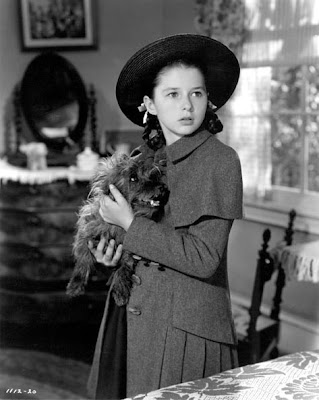
    Terry, now billed as Toto with Virginia Weidler in Bad Little Angel (1939)Terry, now billed as Toto with Virginia Weidler in Bad Little Angel (1939)

    That year was a busy one for Toto. Besides The Wizard of Oz, Toto also made a cameo appearance in MGM's The Women (1939) starring Norma Shearer and Joan Crawford, and had a larger role in Bad Little Angel with Virginia Weidler. The next few years had her appearing in Calling Philo Vance (1940), Twin Beds (1942), and Tortilla Flat (1942), again with Spencer Tracy and Hedy Lamarr and John Garfield. Her final film was George Washington Slept Here (1942) starring Jack Benny and Ann Sheridan. That year Toto retired to Spitz's huge facility on Riverside Drive, until she died sometime in 1944. Even though several of Spitz's dogs were interred at the Camarillo Pet Cemetery in Ventura, he chose to bury Toto on the school property.

    Carl Spitz continued to train dogs. In 1938, he wrote a handbook, "Training your Dog," which contained a foreword by Clark Gable. As far back as 1930, Spitz tried to get the Army to let him train dogs for war use. But, nothing came of it. Finally, in the summer of 1941, they took him up, in a limited way. Spitz agreed to furnish the Army fifty trained sentry dogs – at no cost. He delivered six, had twelve more under training, and already spent $1500 of his own money in the process.

    Spitz trained the first platoon of war dogs installed in the continental United States, just prior to World War II. He was an expert adviser to the War Department in Washington DC and helped formulate the now famous K-9 Corps for both the US Army and Marine Corps. He became prominent nationally as a dog obedience judge at dog shows. Carl Spitz died on September 15, 1976 and is buried at Forest Lawn in Glendale.

    Around 1958, the Ventura Freeway was being built through the San Fernando Valley and the route went through Spitz's school, forcing him to relocate. Today, the Hollywood Dog Training School is still in existence at 10805 Van Owen Street.

    Sadly, not only did the freeway erase the school, but it also obliterated Toto's grave.

    It's appropriate that Toto's Memorial Marker is installed at Hollywood Forever Cemetery. Many of the people that worked with Toto are interred there including Victor Fleming, Harold Rosson (The Wizard of Oz, Tortilla Flat); Cecil B. DeMille, Maude Fealy (The Buccaneer); Erville Anderson, Carl Stockdale, Franz Waxman (Fury); Arthur C. Miller (Bright Eyes); Sidney Franklin, Gregg Toldand (The Dark Angel); Ann Sheridan (George Washington Slept Here). She is in good company.

    Toto Memorial Marker, installed 6/18/2011 at the Hollywood Forever Cemetery

    Toto Memorial Marker, installed 6/18/2011 at the Hollywood Forever Cemetery

    Allan R. Ellenberger is the author of several books on Hollywood.

    Source: http://dogblog.dogster.com/2011/07/26/the-riveting-rea-story-of-toto/


    Digg Delicious StumbleUpon Reddit BlinkList Furl Tumblr Facebook Google Bookmark Google+
    Read more...

    Adopt a Deaf Dog???  

    Posted by — Kim in , , , , , , , , , , , , , , , , ,

    Deaf Dog Adopted by Deaf Kids after Learning Sign Language
    By Kevin Murphy
    Feb 8, 2011

    Most people may be reluctant to adopt a deaf dog, but what if they were deaf themselves?
    KANSAS CITY, Missouri (Reuters) – The idea made sense to inmates at a Missouri prison who trained a deaf dachshund in sign language and then asked the Missouri School for the Deaf in Fulton to take him in.
    Today, the dog named Sparky is right at home with the school's youngsters, who have taught him additional sign language. And a second deaf dog, a Boston Terrier named Petey, may be on his way to the school soon.
    Superintendent Barbara Garrison approved bringing Sparky to the school.
    "She really thought it would be a great learning experience for the kids," Garrison's secretary Barbara McGrath said in an interview Tuesday.
    Sparky came from the South Central Correctional Center in Licking, Mo., which has also offered Petey. Garrison is interested in taking in Petey, but only if she knows it can eventually be placed in a permanent home after some sign language training, McGrath said.
    Sparky responds to hand signals to sit, heel, lay down, and stop and is working on additional signs that mean "food" or "outside."
    Sparky and Petey come from the Puppies for Parole program of the Missouri Department of Corrections in which inmates train animals with behavioral or other issues that make them difficult to adopt. The program saves dogs that might otherwise be euthanized and it gives inmates a constructive activity, said Tina Holland, activities coordinator at the Licking prison.
    "It's been wonderful – it's gone far beyond what we thought it would be," Holland said. "Their goal is just to get these dogs a home."
       
    (Writing by Kevin Murphy, edited by Mary Wisniewski and Greg McCune)

    Also, see:

    Digg Delicious StumbleUpon Reddit BlinkList Furl Tumblr Facebook Google Bookmark Google+
    Read more...

    Can You Relate to This?...  

    Posted by — Kim in , , , , , , ,

    Here's a cute cartoon that I thought I would pass on...so true to life! –Kim

    Stop Yelling!

    © 2011 Calvin & Hobbs

    Digg Delicious StumbleUpon Reddit BlinkList Furl Tumblr Facebook Google Bookmark Google+
    Read more...

    Pet BabySitter Photos...  

    Posted by — Kim in , , , , , , , , ,

    Here are some great pix! –Kim

    Pet BabySitter Photos... PRICELESS!!!

    Source: http://go.funpic.hu

    Digg Delicious StumbleUpon Reddit BlinkList Furl Tumblr Facebook Google Bookmark Google+
    Read more...

    Fearful Dogs  

    Posted by — Kim in , , , , , , , , , , , , , , , , , , ,

    Here's a great article that I thought I would pass on...hope you find it helpful! –Kim

    How to Greet Dogs
    by Debbie Jacobs

    Unfortunately for fearful and aggressive dogs, the manner in which most people introduce themselves to dogs can be threatening to them. While a well socialized dog may tolerate and even enjoy a hand reaching out to them, a face looming over them or eye-to-eye contact, the scared dog often cannot.

    The Dog Gone Safe Web site has great information for helping anyone learn more about how to greet and interact with dogs.

    It is best not to assume that any dog you encounter is a dog that is comfortable greeting a stranger. Even the most stable dog can be stressed in some situations and prefer to be left alone. Unless you consider yourself an expert on dog body language it's best to let a dog initiate an interaction with you, rather than you moving toward them.

    Even a dog that approaches you for a sniff may not be saying, 'Hi! Pet me!' My own scared dog will frequently move toward people to get a sniff, but will bolt away should they move or look at him. He is trying to see what he's dealing with, not trying to deal with it.

    Children are often taught to put their hand out for a dog to sniff. Again, not a problem for a 'happy to see you' kind of dog, but for a fearful dog that hand can be scary and for a dog that is aggressive, biting that hand may seem like the thing they need to do to protect themselves from it.

    I'm sorry to say that the people who consider themselves to 'good with dogs' or people who would say that 'dogs like them' are often the worst when it comes to dealing with fearful dogs. They just cannot accept or believe that a dog would not warm up to them or enjoy their company. A fearful dog's behavior should not be taken personally. My dog Sunny is an equal opportunity fearful dog, as are many dogs like him.

    Below are a few guidelines to follow when meeting new dogs.

    • Do not approach a dog, especially if it is tied up or on leash.
    • Ask the owner if it is OK for you to interact with their dog before you do it.
    • Stand still if a dog approaches you for a sniff; leave your hands by your side and glance away from the dog.
    • Squat down instead of bending over to talk to or pet a dog; avoid staring at them, putting your face near theirs or hugging them.
    • Do not reach over a dog's head to pet it, instead offer chin scratches or chest rubs.
    • Do not touch a dog that has rolled over.
    • Ignore a dog that shows any indication of being timid or upset; baby talk, reaching out with treats, or any attempt to connect with the dog can backfire and cause the dog to react fearfully or aggressively.
    • Do not feel like every dog you meet needs to be handled; watch a dog's behavior and body language carefully. Learn about calming signals and other ways that dogs communicate their feelings; a dog that is not obviously happy to see you (open mouth, waggy tail and body) is telling you a lot about how they feel. If a dog is not inviting you to handle or interact with them, don't.

    Source: http://fearfuldogs.com/how-to-greet-dogs


    Also, see:

    Digg Delicious StumbleUpon Reddit BlinkList Furl Tumblr Facebook Google Bookmark Google+
    Read more...

    List of No-kill Shelters and Rescues

    List of No-kill Shelters and Rescues: 
    NATIONAL SEARCH
    Find local shelters near you! LOCAL SEARCH
    You can adopt or foster from any of these shelters or donate to support their efforts. Be sure to confirm that they are a "no-kill" shelter. Then, be a part of the solution!

    << – Newer Posts / Older Posts – >>
    CLICK HERE FIRST; THEN CLICK THE PAGE LINK BELOW.